I was First Secretary at the British Embassy in Warsaw 1994-98. While that was a long time ago, I knew personally many of the people at the heart of the current crisis, such as Donald Tusk and Radek Sikorski.
1) The first thing to say about Poland is that the current crisis is unlikely to turn violent, certainly not in a sustained way. There will be a lot of yelling and name-calling and a lot of references to obscure old feuds and scandals, but Poland is not Ukraine or even France, and will muddle through as usual with some kind of woolly compromise to see us through the next few years.
General Jaruzelski, the last major leader under Communism, used to be the neighbour who shared the boundary fence at the bottom of my garden. He oversaw martial law and a secret service which was pretty vicious – but looking back with the perspective of history, the remarkable thing is not how much, but how little, violent repression was used against Solidarność in 1980 to 1983. Some 120 people were killed and thousands imprisoned, but for a revolution that triggered world-shaking political change that is remarkably restrained.
Then with Wałęsa in power as President, Jaruzelski used to go about Warsaw quite openly, and I would say “Dzień Dobry Panie Generale” to him in the mornings as he walked past my gate. Violence is not natural in Polish politics.
2) The second thing to understand is that Polish politics is split between the right and the nationalist right. The left is now almost insignificant – the mildly social-democratic Nowa Lewica is a small junior partner in Tusk’s governing coalition and polls about 8%. That is pretty well the only “left”. Elements of the governing Civic Coalition – such as Foreign Minister Radek Sikorski, are very right by British standards. Sikorski was in the Bullingdon Club with Osborne and Johnson and is a bit to the right of either on social or economic policy.
The opposition nationalist right are socially conservative and religious: abortion remains the touchstone defining issue, which directly relates to the current dispute about the Constitutional Tribunal. There is no significant economic division between the right and nationalist right, with the latter perhaps slightly more socially minded in matters like welfare spending.
It is a great mistake to try to shoehorn the divisions into a classic economic policy-related party alignment of left and right, or even into the liberal vs populist model. Poland is sui generis, a thing unto itself.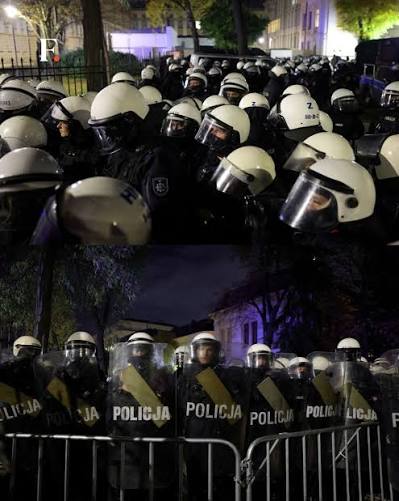
3) The crisis about the Constitutional Tribunal is Superficially Meta. It is about the composition of the Constitutional Tribunal rather than any case currently before the Court. But it has become the totem of the deep divisions in Polish society.
Poland has a hybrid system that is neither an executive presidency nor a parliamentary democracy. The power of legislative initiative lies with the Parliament (Sejm) and the Prime Minister appointed by the Sejm. But the President has an active power of veto and controls important appointments.
The Constitutional Tribunal ensures the constitution is properly followed and thus judges disputes between the President, Prime Minister and Sejm. The tribunal also ensures that the rights of citizens enshrined in the constitution are respected. It also – and this is a major difference from the UK where there is no such judicial power – ensures Polish legislation is compatible with international law and Poland’s treaty relations.
The most important recent decision of the Constitutional Tribunal was naturally on abortion, which it limited in 2020 by abolishing the health-related exemption which had provided for most abortions. The history of abortion in Poland is again very strange to a non-Pole. When I was in Poland in the mid-1990s it had both the highest rate per capita of Catholic church attendance in the world and arguably the highest abortion rate per capita in the world. It is a complex subject for another day.
4) As usual in Poland, both sides are entirely unreasonable. At the moment Poland has a PiS (nationalist right) President Nawrocki versus a right Civic Coalition Prime Minister Tusk. The longstanding problem with the Constitutional Tribunal is that its members must be appointed by the Sejm but sworn in by the President. When neither are prepared to compromise – as is frequently the case – this has led to impasse after impasse.
The immediate crisis began on 30 October 2026 when Judge Anna Korwin-Piotrowska — elected by the present Sejm majority but never sworn in by Nawrocki — ordered the suspension of Tribunal President Bogdan Święczkowski (a PiS appointee) and declared herself in charge. Tusk’s government then deployed riot police to secure the building in support of her move; Nawrocki abandoned a trip to Senegal to return, and PiS supporters gathered outside. Each side accused the other of a coup.
The conflict dates back to 2015 but every legacy media account I have seen gives a false account of how it started.
In 2015 the right Civic Platform government, a direct predecessor of Tusk’s coalition, knew it was losing power. It therefore sought to pack the Constitutional Tribunal. It appointed five new judges. Three of these fell due just before Civic Platform left power, but it also passed a law allowing it to appoint in advance two further judges whose terms fell due under the incoming PiS government. Civic Platform thus attempted to appoint five new judges, to attempt to limit the scope of the incoming PiS Sejm and Presidency.
The new PiS government immediately sought to cancel the appointment of all five new judges and appoint its own judges in their place. This was indeed of dubious legality. But in truth it was a reaction to a profoundly undemocratic action by Civic Platform to pack the court with its own supporters as it left power which, while it may have been legal, was outrageous.
The Constitutional Tribunal itself eventually decided that the first three Civic Platform judges were appointed legitimately, and that the next two Civic Platform judges whose appointments should have fallen due outwith that Sejm’s term were not legitimate. They therefore also approved two of the PiS judges.
This was an obviously correct decision which the politicians had been incapable of agreeing. But it was Civic Platform not PiS which first tried to fix the court, a point completely misrepresented in current legacy media accounts and by the European Commission.
Subsequently the PiS made further changes to the composition and powers of the Constitutional Tribunal, which were ruled illegal by the European Court of Justice, the judicial body of the European Union.
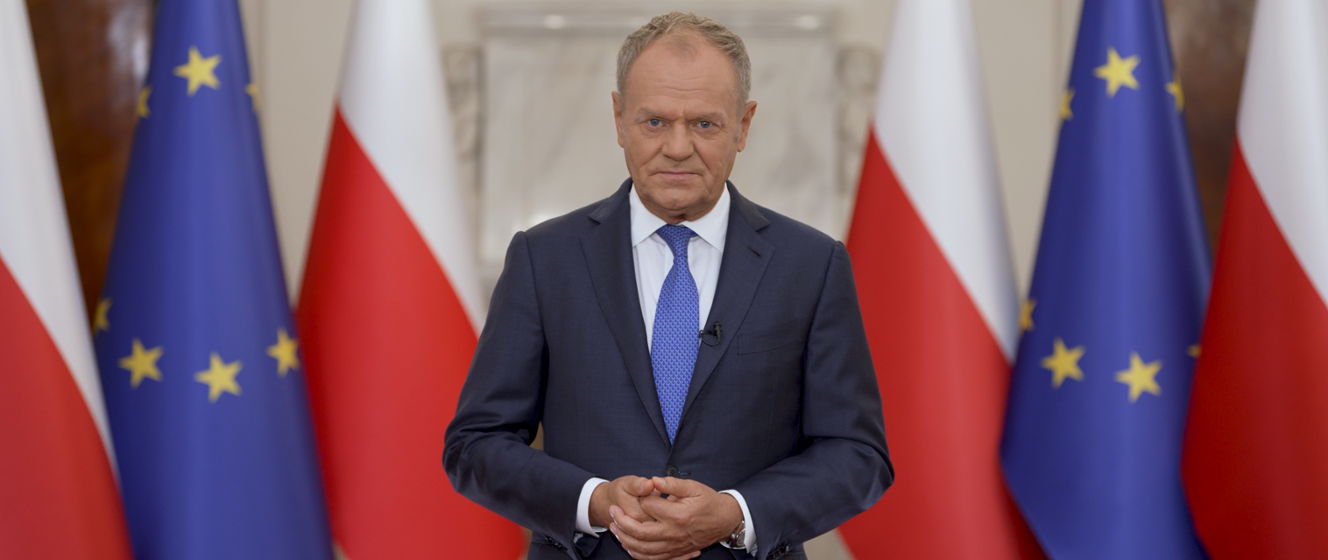
5) The EU is at the heart of the division. Donald Tusk himself has tried to spin the conflict this way. His address to the nation after his coup was made in front of a plethora of Polish and EU flags. He had repeatedly claimed over the previous two days that the PiS was seeking to take Poland out of the European Union. The PiS counter that Donald Tusk wishes to join the Euro, the European Central Bank and transfer Poland’s gold reserves to the EU (which the pre-coup Constitutional Tribunal would seek to block).
Both sides have a point. Donald Tusk would like to join the Euro, and frequently said so in the past – though joining the Euro does not actually entail transferring Poland’s substantial gold reserves. The PiS would like to leave the EU. But neither side currently has their inward desire as a stated official objective, because both positions are unpopular.
PiS President Nawrocki’s senior adviser on EU affairs is Jacek Saryusz-Wolski, a man with whom I worked closely on Polish EU accession. For decades in the national and European parliament he was the face of Polish EU enthusiasm. Saryusz-Wolski is however now deeply disillusioned that the EU of von der Leyen, Merz, Macron and Kallas is not the body he dreamt of. He views the present EU as deeply undemocratic and overbearing. He has, in short, gone through exactly the same transformation in his views on the EU as I have.
The EU was seen as central to Polish nationalist identity because it guaranteed Polish independence, which given Poland’s traumatic history of occupation and foreign domination was central. EU membership led to two decades of outstanding economic growth. But a number of factors have eroded the EU sheen with time. These include a fear of German domination, the EU’s social liberalism and the undemocratic nature of EU institutions.
When I knew them in the old days, I would have thought it impossible that Jacek Sarusz-Wolski would be on a Eurosceptic nationalist right while Radek Sikorski would be on an opposing Europhile right. The opposite was plainly the case back then. To understand the switching of allegiances you need to consider something Western legacy media is blithely ignoring: the centrality of Ukraine to current events in Poland.
6) Ukraine is central to this. Simply put, the nationalist right has had its fill of Zelensky, whereas Tusk is a devotee of the von der Leyen/Kallas/Merz war-hawk line.
For British people, Ukraine is another “far-away country of which we know nothing”. To Poles it is a neighbour, of which they know a very great deal indeed. Poland probably houses more Ukrainian refugees than any other state, both in absolute numbers and per capita. Part of the antipathy from the nationalist right is anti-immigrant resentment.
But Ukraine really is an extremely corrupt state, and the Poles understand this very well. Poles contribute to the vast sums which the EU has poured into the Zelensky regime, and Poles also have a close-up view of Ukrainian regime-aligned figures in supercars buying top-end properties. Ukrainians are the largest foreign buyers of Polish real estate. This is simply true.
Foreign Minister Radek Sikorski ended up on the Civic Coalition side of the equation, because his primary loyalty is, and always was, to NATO, as befits a member of the Bullingdon Club and husband of crazed Russophobe Anne Applebaum.
A combination of events in Ukraine and the advent of President Nawrocki have caused a shift of the nationalist right to a much more sceptical position on Ukraine. Nawrocki is of a younger generation of politician – he is 43 and was only 15 when I left Poland. But his entire professional career prior to becoming President was connected to World War II commemoration.
Zelensky had been given Poland’s highest award. The Order of the White Eagle. Nawrocki cancelled the award and made Zelensky return it, due to Ukrainian official commemoration of Nazi-allied figures and units who had participated in the massacres of Poles during World War II. Other senior Ukrainians also returned their Polish decorations. That is a pretty startling diplomatic split, hugely under-reported in the West.
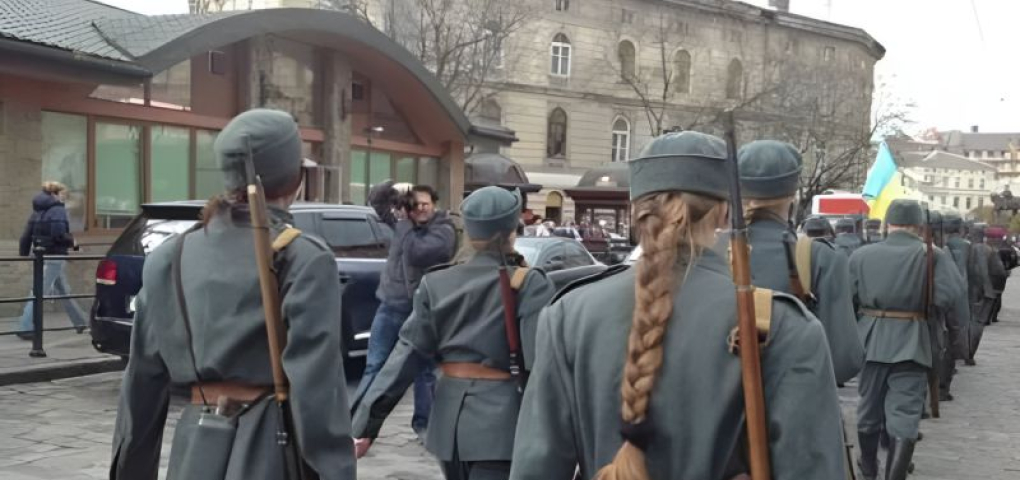
The most prestigious Ukrainian TV production at this moment is “Winged Lions”, a series about the Galician Division which was formed in the First World War to fight primarily against Poland. This was not only in the field against Poland as a second front in Poland’s defining national war against the Soviet Union in 1921, it was also the predecessor of the Galician Brigade of the Waffen SS – the continuing commemoration of which is a running sore between the two countries.
To add insult to injury the series is filmed in the former major Polish city of Lvov.
Naturally at time of war Ukrainian nationalism is running amok, and its insensitivity and – in Polish eyes – ingratitude towards Polish sensibility is a real problem.
Poland is itself a traumatised state. The Poles lost their state completely in the eighteenth century. Polish states re-emerged at times under French and Soviet domination; but I broadly accept that, apart from 1919 to 1939, a truly sovereign Polish state did not return until the 1990s.
Add to that the fact that until 1946 Western Ukraine was a part of Poland and integral to Polish identity. Lvov was a major centre of Polish architecture and culture. It is hard to find a fitting simile, but to Poles it is as though Canterbury and Norwich, Kent and East Anglia, were taken from the English by France in the 1940s.
There is no serious movement to reopen boundary questions, not least because so much of Poland was Germany until 1946. But the fact that the parts of Poland where the Ukrainians massacred tens of thousands of Polish civilians, are now Ukrainian territory, naturally has an impact on the Polish psyche.
7) This was an attempted coup. That is a fair description. All Hallows’ Eve is a massive thing in Poland. People return to their ancestral graves and light candles in red glass lanterns, keeping vigil. Families leave the cities and return to ancestral villages to do this. It is an official Catholic church festival, so naturally it is disproportionately PiS supporters who are occupied in this. Choosing the Friday a day before All Hallows’ Eve to move physically against the Constitutional Tribunal was clearly a deliberate tactical choice when the least resistance might be expected.
It also has the classic ingredient of a coup that President Nawrocki had just left the country on an official visit.
Nawrocki’s decisiveness in turning around the Presidential plane and returning to Warsaw, forcing his way through the cordon of riot police around the Constitutional Tribunal, has changed the situation on the ground towards him.
There is the fog that surrounds highly contested events in real time. It is widely claimed that Tusk attempted to have Nawrocki’s plane denied landing at Warsaw airport. It is hard to judge yet if this is true.
It is also widely claimed that major portions of the massed riot police Tusk put around the Constitutional Tribunal displayed no numbers and did not speak Polish. I am not inclined simply to dismiss this, because there are so many eyewitness reports, including from Polish MPs and MEPs.
Widely circulated footage allegedly showing German police convoys inside Poland is hotly disputed. Again a little time may be needed to determine the truth.
What does appear highly probable is that the European Commission had advance notice of the coup, because the speed with which they jumped in to support Tusk and Pietrowska’s takeover of the Constitutional Tribunal was remarkable, given the complexity of the situation. Personally I cannot see any argument whatsoever that Pietrowska’s action was legal.
8) I expect this to fizzle out. It may appear like the most massive bust-up, but I know many of these people and they all know each other. The bitterness does not really extend far into personal relationships.
Tusk probably expected to win control of the streets with his riot police and because his supporters are very much urban. A much higher proportion of the Polish population lives in rural areas than is the Western norm, and that is where the strength of the PiS lies. It is therefore much harder for the nationalist right quickly to mobilise an urban crowd than for Tusk’s right, even when it isn’t All Hallows’ Eve.
But PiS supporters did turn out to confront the riot police, whereas there has been a distinct lack of people pouring onto the streets to support Tusk.
So far it seems Tusk’s gambit has failed spectacularly. He is left in the position of appearing to have attempted to use physical force and the riot police, against the Tribunal and the President, on behalf of von der Leyen, Merz, and EU interests which are a cipher for Germany.
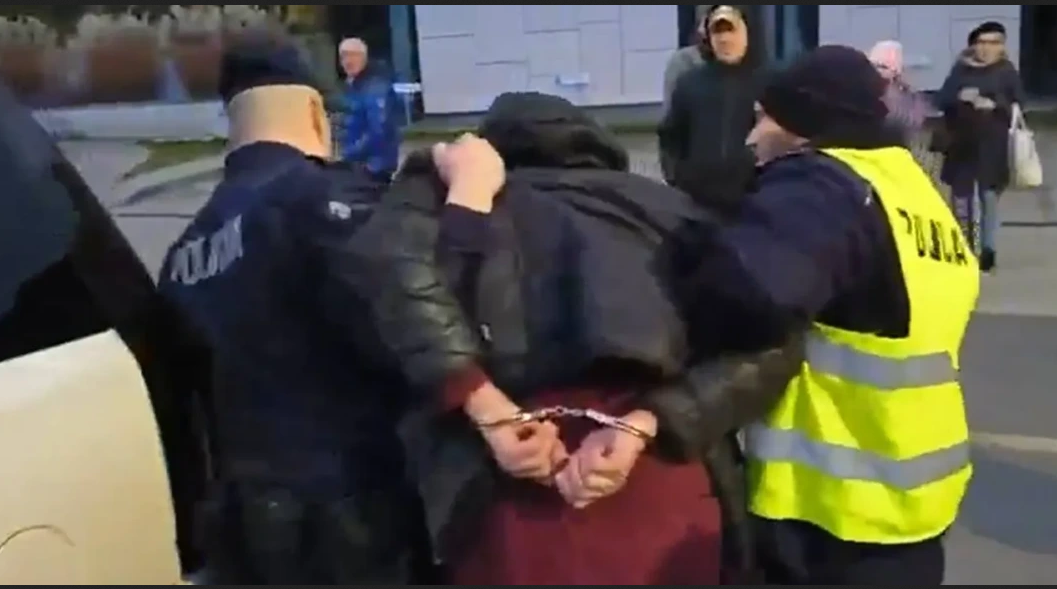
The videos of German police convoys add to this impression, irrespective of whether they are genuinely in Poland or not. The extraordinary footage of the police on All Saints’ Day leading away in handcuffs, from the grave of their two-year-old child, the husband of popular nationalist-right journalist Danuta Holecka, is an image that will haunt Tusk’s future. Nothing could be more shocking to Polish sensibility. The official explanation of a traffic violation is extraordinary. It could of course just have been apolitical and coincided with the capital’s events, but the damage is done (and anyway I doubt it).
The Constitutional Tribunal ruling from 2020 on abortion has been followed as law in Poland, irrespective of who has been in power and irrespective of what the European Court of Justice and European Court of Human Rights have said. So in spite of all the wrangling, it is not a dead institution.
We will see how the power struggle plays out. My expectation is that it will calm down, there will be long-running inquiries but nobody will go to jail. I do expect that Tusk, the EU and Zelensky are all weakened by this, and it has been a good weekend for the PiS.
When I was in Poland, I immersed myself in the culture and language, and spent time in every single region. I had learnt the Polish language, including at the Catholic University of Lublin and in Sopot. I believe I was the only Western diplomat to predict correctly that Kwaśniewski would defeat Wałęsa in the 1996 election. My Ambassador sent an urgent telegram to London to contradict my final campaign report because it said Kwaśniewski would win. I knew, because I had a real knowledge of provincial Poland that other Warsaw-focused Western diplomats lacked.
But while I have a deep love for Poland and its people, I very seldom write about its politics or its politicians – because frankly I find both exasperating. Polish poIitics consists almost entirely of unreasonable men with foolish opinions yelling at each other about points tangential to their real disagreements. I do hope that my explanation of current events is helpful to your own thoughts on the matter.
—————————————–
Anybody is welcome to republish and reuse my work, including in translation.
My work has no funding at all except for your subscriptions. If you already subscribe, I would be grateful if you could check if your subscription is still active. Over 80% of my subscriptions lapse when debit or credit cards expire: the systems do not warn you.
Because some people wish an alternative to PayPal, I have set up additional new methods of subscription payment including Patreon account and a Substack account, if you wish to subscribe that way. The content will be the same as you get on this blog. Substack has the advantage of overcoming social media suppression by emailing you direct every time I post. You can, if you wish, subscribe free to Substack and use the email notifications as a trigger to come to this blog and read the articles for free.
I am determined to maintain free access for those who cannot afford a subscription.
Choose subscription amount from dropdown box:
PayPal address for one-off donations: [email protected]
Alternatively by bank transfer or standing order:
Account name
MURRAY CJ
Account number 3 2 1 5 0 9 6 2
Sort code 6 0 – 4 0 – 0 5
IBAN GB98NWBK60400532150962
BIC NWBKGB2L
Bank address NatWest, PO Box 414, 38 Strand, London, WC2H 5JB
Bitcoin: bc1q3sdm60rshynxtvfnkhhqjn83vk3e3nyw78cjx9
Ethereum/ERC-20: 0x764a6054783e86C321Cb8208442477d24834861a
Thank you Craig for this highly informative post. I had seen some reports but I was unable to make sense of them.
Thank you Craig for your informed assesment. The summary was excellent, it is nice to find such clairity in a news report.
Your explanation is very helpful indeed, Craig. Thank you.
“(…)
I expect this to fizzle out. It may appear like the most massive bust-up, but I know many of these people and they all know each other.
(…)”
Exactomundo.
p.s. Also illustrative of the same performative nature that has replaced serious politics in Europe is following tiny news item from Germany today:
Former German minister for economy and energy, Robert Habeck, who was the main driver to end Russsian natural gas to Germany, recently in an interview:
“(…)remarked that he did not understand why Russian President Vladimir Putin had not “turned off the gas” immediately after the war in Ukraine began—“because then, to put it bluntly, we would have been completely screwed.”(…)”.
In case this fairy-tale of RU turning off the lights in Germany comes up again.
Thanks for the orientation in what would otherwise be a confusing situation, as if Tories vs Reform plus multiple constitutional disputes and even crises summed up UK politics.
In many democracies there has been a political tribalization of people, which I will call for want of better terms progressives vs regressives. In many European countries (Poland, Germany, Estonia, Moldova, Ukraine) it tends to be the geographically Eastern parts that are socially conservative and look to Russia, and the Western parts (the “progressives”) that look to the EU, whereas in Britain it is Brexiters who are “regressive”, as are Republicans in America. Even outside Europe these differences often reflect geographical and historical divisions in the past, so that the Deep South is Republican country.
Anne Applebaum has written the Pulitzer prize-winning Gulag (ISBN 9780140283105), an academic complement to Alexander Solzhenitsyn’s well known The Gulag Archipelago, and many other interesting books. She should exert a good influence in Poland in the future.
There needs to be a movement in Poland to promote dialogue between the “tribes”. It shouldn’t be impossible, perhaps along the lines of the American film The Work in Progress
Just excellent – hugely impressed.
You seem to have learnt more about Poland in 4 years than I did in 20.
” I very seldom write about its politics or its politicians, because frankly I find both exasperating. ”
Indeed – it is not so much hard to follow, as just plain exasperating.
Sikorski – to add his first job was as a “journalist embedded with the Mujahadin in Afghanistan”. So I think we all know who he really represents. And then he managed to go from being Minister of Defence for PiS (ie team Nawvrocki) to Foreign minister for PO (now team Tusk) in the same year!! 2007. Clearly he is the US cabinet appointment.
You reference the ww2 slaughter of Poles by Ukrainian nationalists which has always been a keen issue for Poles as many have relatives that died in then Polish Galicia. Nawrocki has pushed this point hard and Poles have followed it.
But there is still a weird understanding of WW2 History.
Poles still hate the Russian’s most, then Ukrainians, and mostly the Germans least.
Yet Soviets killed 100-200k Poles in WW2, and then saved the country from the Germans.
Ukrainian nationalists killed 100k Poles + 100k Polish Jews.
Germany killed 3 million Poles and 3 milion Polish Jews and had intended to kill a total of 11m until the need for a slave workforce intervened.
Funny kind of remembrance, no wonder Polish politics is so exasperating
Would it be off the mark to say Sikorski is Mi6 – his wife’s surely CIA, I take it Nawrocki is pro-USA and Tusk is pro-EU.
I’ve also read that Nawrocki was a pretty good amateur boxer, back in the day, which he’s kept going – I’m sure there’s a clip of him online sparring with the legendary Manny Pacquiao.
He should knock Tusk out.
EU/Demparty’s proxy vs Trump’s proxy, and yet somehow this is all Putin’s fault. You don’t need to watch Game of Thrones when you have Poland.