Monthly archives: September 2026


Losing My Religion 234

I have lost faith both in Western social democracy, and in the institutions of international law. As both have been fundamental to the work of my life, this is rather a blow as I approach 70.

A number of deeply shocking things have happened this past three years, not as extraneous events, but as conscious acts of western governments acting in unison. The Genocide in Gaza has been the most obvious.

When social media started to show us relentless imagery of shredded children and human suffering beyond belief, it was astonishing to me that the governments of the western social democracies almost unanimously continued to support Israel. The UK is actively complicit in the Genocide, providing weaponry, aerial surveillance, intelligence cooperation and vital diplomatic and political support to Israel.

Somehow I thought this would all stop. Equilibrium would be restored, the innate decency of the British people would prevail, and the support for Israel would be reversed. Indeed, I reasoned, in the long term this could break the hold of the Zionist donor network on British politicians, so deep was the popular revulsion at the most public and vicious genocide imaginable.

None of this happened. Instead the more indefensible Israel’s actions have become, the more the UK’s political and media Establishment have rallied to Israel. In the UK as throughout the world, our rulers have responded to dissent over Israel with harsh repression of their own people. To see Burnham stand at the podium of the UN General Assembly in New York and declare the UK’s support for Israel, while the genocide continues and Israel is relentlessly destroying southern Lebanon and is occupying southern Syria, was instructive.

His tactical change of tone to notice Israeli crimes has no practical effect. The UK implements new sanctions on Russia within 48 hours of announcement, or even less. The “sanctions” on Israeli illegal settlements are going to take a year to design and implement, to make certain they don’t work.

When they proscribed as “terrorist” a civil disobedience group and police started arresting little old ladies as terrorists for protesting about it, I thought this too was a temporary madness which would pass. I witnessed outside the Royal Courts of Justice the police lifting up elderly people in wheelchairs to arrest them for holding a sign, and I thought ultimately the system will repudiate this madness.

It has not repudiated the madness. It turns out that policemen are happy to arrest octogenarian priests for expressing the wrong thoughts, and judges are prepared to impose vicious “terrorist connection” prison terms for property damage by persons seeking to hinder a genocide. The English Court of Appeal stated coldly:

The vast majority of those arrested had chosen to hold signs which read, “I oppose genocide. I support Palestine Action”. We attach little weight to this when it comes to assessing the extent of the interference with Convention rights in this case. All those holding such signs either did or ought to have realised that what they were doing was showing support for Palestine Action.

It is one thing for people voluntarily to hold a placard supporting Palestine Action which they know to be a proscribed organisation. That is a criminal act.

I have mentioned this to you before but I was very struck when I read Irmtrud Wojak’s life of Fritz Bauer by the continuity of individual judges and lawyers, who served on with equanimity under the Weimar Republic, the Third Reich and West Germany without evidence of guilt and remorse. About 70% of West German judges had been Nazi judges administering “Nazi justice.”

Fritz Bauer, a radical German Jewish prosecutor, was continually blocked in his heroic efforts to bring some justice. The book held me so strongly because it is the granular narration of the banality of evil, in its tale after tale of Nazi criminals protected by compromised judges.

The realisation that the law is nothing to do with justice, and that courts are imposing the power of the state rather than seeking some higher ideal, came home to me on Friday as we sat through the expedited hearing of our appeal at the Court of Session in Edinburgh, where we are trying to make the Scottish judicial review of the proscription of Palestine Action actually happen.

This was our sixth or seventh time in court and we have spent about £250,000 trying to protect the liberties of people in Scotland from oppression. Very decent people are being branded as terrorists, with potentially life-changing consequences, for merely holding a placard or wearing a T shirt. I met one person in Glasgow whose home and vehicle insurance had increased by over £600 as a result of a terrorism charge for a T shirt. Others have been debanked. International travel is restricted. The jail sentences are still to come.

The Court of Appeal of England and Wales has ruled all this as proportionate in the interests of “National Security”, to protect the nation from those who would disrupt the Israeli weapons supply chain. Our effort to challenge it in Scotland has met with delay after delay, and a blistering exhibition of trench Lawfare by the UK government.

I don’t think the judges of the Inner House of the Court of Session who heard us on Friday could have been less engaged. Aidan O’Neill KC spoke for us for over an hour about the constitutional right of Scots to have their liberties protected by a Scottish court, about the lack of any provision in Court Rules for suspending – “sisting” – a judicial review as this one had been – about the perverse decision to grant the Review and then continually suspend it, causing us great expense.

What he did not talk about – because this was a purely procedural hearing – was the arrests and lives in turmoil in Scotland, still less the lives destroyed in Gaza.

The three judges sat making notes but did not engage with Aidan, asking almost no questions. This was entirely different when the UK Government lawyer spoke, Mark Lindsay KC, addressed the court very briefly. The judges engaged with him constantly, to reinforce his points or to suggest additional helpful points he might have missed.

Lord Pentland, the Lord President of the Court of Session (and former Tory parliamentary candidate) got most animated when discussing the secret closed court sessions where secret intelligence evidence is heard that we are never told about. Pentland seemed extremely pleased with the notion that these are difficult and time consuming and there could not be enough time for them before the UK Supreme Court hears the English appeal on 4 November.

Mark Lindsay added here the incredible point that the judgement in the judicial review must be cleared with the security services, which would take at least five days. He explained that one reason it takes so long is that it needs to be typed on special secure laptops.

So that is where we are in 2026. Courts hearing secret evidence from the security services that the petitioner in the case will never see, and the security services vetting the judgement of the court.

The other reasons Lindsay advanced for not having a judicial review were equally jaw dropping. It would cost money, and use judicial resources that might be better deployed on something else. It would simply be too expensive for Scotland. Best just follow whatever England said.

I have to say I left court deeply depressed. Judgement is reserved – itself significant when we were arguing for the judicial review to proceed urgently before the Supreme Court meets.

Currently the full video of the hearing is still available here.

If that was not miserable enough, we also had to endure the UN General Assembly being treated, not as a meeting point for nations to speak peace and reach agreement, but as a rostrum for crazed fascism.

We had Donald Trump threatening to annihilate Iran and destroy Iranian culture. We had ICC-wanted war criminal Netanyahu waving around pagers to glory in terrorism while taunting the world. Both spoke from a position of confidence in military power enabling them to defy and humiliate the world community. It may be hubris, but it is currently in the ascendant. China shows no interest in countering it and nobody else really can.

Neither China nor Russia were strong in condemnation of Israel over Gaza – they did not speak the language of war crimes at the General Assembly, let alone Genocide. Both made anodyne remarks about a two-state solution, and said that Israeli actions were endangering its viability. As it is blindingly obvious that a two-state solution is now impossible, this was pathetic. Remember – and this is key to understanding the world today – neither Russia nor China vetoed the UN Security Council resolution endorsing Trump’s Board of Peace and giving it a firm right in international law to control the destiny of Gaza.

The European powers used the UN podium to spout Russophobia and amplify the demand for war with Russia.

I despair for the United Nations. I despair for the International Criminal court, which seems fatally undermined. Its arrest warrant for Netanyahu is ignored by the Western powers. Three EU states allowed his plane to overfly their airspace en route to New York. Karim Khan was ousted as Chief Prosecutor for obtaining the warrant against Netanyahu, on flimsy sexual abuse allegations for which an inquiry by three judges found no firm evidence. The Western powers led a fierce campaign for his dismissal by the member states.

The judges themselves have been subject to US sanctions and debanking. I had always hoped – and believed – the ICC would develop beyond a role of punishing the West’s designated enemies and keeping Africa in line. I did not realise that as soon as the ICC did this, the Western powers would move to destroy the ICC.

The venerable International Court of Justice is also creaking. I had expected it would take three years or so for it to reach a decision in the South Africa vs Israel genocide case. That timetable now looks more like eight years.

In part it seems that South Africa may have blinked. It was South Africa which requested an extraordinary 18 months to reply to Israel’s response to their petition. The Court had already granted Israel two lengthy postponements of their reply. The Israelis will then get to reply again and a further 18 months. I suspect South Africa is going along with kicking the can down the road under US pressure, and the new timetable will take us beyond Trump.

It is however not a good look for the Court to take so long in deciding on a case over a Convention which is supposed to prevent Genocide, not to punish it. It is also notable that Israel has entirely ignored the interim orders the Court gave two years ago, and ignored the separate judgement on the status of the Occupied Territories.

The truth is the Court has no armies, and as the Western powers are actively abetting Israel in its actions the ICJ is, sadly, a dead letter.

The UK is now going to ignore the ICJ decision on the Chagos Islands. The court ruled that the UK must give them back to Mauritius. The US airbase on Diego Garcia is irrelevant to that ICJ decision. The UK has now decided to defy the ICJ because the US has declined to pay for the lease of the airbase from Mauritius. That in no way negates the duty to return the islands. But the UK media have reported Streeting’s decision to cancel the return of the islands with, so far as I have seen, no reference to the ICJ at all.

It is not just that the institutions of law, both domestically and internationally, in which I have lost belief. The social contract of Western nations, in which the government provides for the welfare of the population in return for their loyalty and taxes, appears to have broken down.

The trend towards greater wealth inequality in late-stage capitalism is incredibly, exponentially rapid. Living standards for ordinary people have been static for two decades and, whatever official statistics may say, to many if feels their standard of living has declined. Social mobility is gone. Graduates are stacking shelves and delivering pizzas. Heating and fuel costs are extraordinary. So is rent, and landlordism is rampant.

It is impossible to look at social media without hitting the stark reality that Islamophobia and racism are now deeply seated in a large proportion of the population. The propaganda model has been reinforced by the billionaire capture of all the major social media gatekeeper apps. Rather than being a possible solution to state and billionaire propaganda, social media has become a major part of the problem. It appears particularly effective in amplifying and spreading racism.

We are now faced with a Ministry of Truth in the UK to enforce state propaganda narratives – like the ridiculous Skripal story, the ambulances false flag or the Fairford farrago. The one thing we know for certain about “RAF” – truly USAF – Fairford is that hundreds of tonnes of high explosive have been dropped from Fairford on Iran. The notion of “defensive bombing” – parroted by the entire media – is an Orwellian symptom of what we have become.

There is no escaping the fact that large numbers of people are very susceptible to the propaganda. I know well-meaning left-wing people who believe that Iran machine gunned 50,000 dissidents and that nothing significant happened in Ukraine before 2022.

The focus of hate away from the billionaire class who are enslaving society, and towards immigrants, is most worrying of all. It of course feeds both domestic and foreign policy views – there are vast numbers of people delighted at the mass murder of Iranians, Palestinians, Lebanese or Yemenis because they are brown or Muslim. The same people think that immigrants in small boats are responsible for the decline in standard of living of working people in the UK.

Western social democracy is dying.

The democracy bit offers no meaningful choice at election in terms of wealth distribution or the structure of capitalist society. It offers no significant variation on the increasingly authoritarian nature of the state. It certainly offers no choice in foreign or defence policy. It really only offers a bit more or a bit less racism in immigration and welfare policies.

The social bit is decaying even faster. The very fabric of our cities is visibly crumbling. In the UK the health service is strained beyond utility in a great many cases. State pensions are miserly and insufficient. Many young people have no prospect but to pay rent to landlords for poor quality housing their whole life. Many graduates will never find meaningful or satisfactory employment. All of this is getting palpably worse year by year.

That’s me in the corner

That’s me in the spotlight

Losing my religion

I feel that the rather pleasant world I grew up in has been replaced by something much nastier and more raw. Literally dozens of my friends have been arrested these last three years, simply for what they say and think.

The problem with losing faith is how you replace it.


Another problem is that the legal battle for Palestine Action still has to be paid for. Our CrowdJustice crowdfunder was closed down by the card processors as a result of pressure from the USA. I was informed by the legal team on Friday that legal fees due currently outstrip available funds. If you can help, please do. If you know somebody else better placed to help, please ask them.

These alternative donation methods are still working as of 29 September 12 noon. Any funds received will checked hourly and be paid immediately to the lawyers to avoid possible seizure.

Other donation methods are currently still available even though the CrowdJustice route has been closed.. Obviously we now need funds more than ever to carry on.

Alternatively by bank transfer:

Account name
MURRAY CJ
Account number 3 2 1 5 0 9 6 2
Sort code 6 0 – 4 0 – 0 5
IBAN GB98NWBK60400532150962
BIC NWBKGB2L
Bank address NatWest, PO Box 414, 38 Strand, London, WC2H 5JB

Or crypto:

Bitcoin: bc1q3sdm60rshynxtvfnkhhqjn83vk3e3nyw78cjx9
Ethereum/ERC-20: 0x764a6054783e86C321Cb8208442477d24834861a


View with comments

Palestine Action Judicial Review 249

On Friday we have our appeal against the suspension of the Palestine Action judicial review in Scotland. Our legal crowdfunder has been closed down by the card processors following Trump’s designation of Palestine Action as a global terrorist organisation.

https://www.crowdjustice.com/case/scottish-challenge-to-proscription/dashboard/

If you can, please come to the Court of Session in Edinburgh for 10am. If you cannot come, you can watch the livestream here

For the first time I was not involved with the legal team in drafting the Note of Argument, because I was too sick in the three day window after the last hearing we had to prepare it.

It turns out that our lawyers are much more radical when freed from me exhorting them to be more radical!

NOTE OF ARGUMENT FOR THE RECLAIMER
PETITION
of
CRAIG MURRAY, residing at EH10

RECLAIMER
For judicial review of the Terrorism Act 2000
(Proscribed Organisations) (Amendment) Order 2025

1. INTRODUCTION

1.1 The reclaimer moves the Court to:
  a. allow the reclaiming motion;
  b. recall the interlocutor of the Lord Ordinary dated 25 August 2026;
  c. remit the cause to the Lord Ordinary:
   i. with a direction that he report the whole cause to the Inner House in terms of rule 34.1(1);
   ii. failing which, with a direction for urgent disposal of the petition in the Outer House.

2. SUMMARY

2.1 For the reasons outlined in this Note, the reclaimer submits that:
  a. The decision to sist the proceedings was incompetent, failing which, plainly wrong in all of the circumstances.
  b. The decision not to report the whole cause to the Inner House, while also declining to dispose of the petition in the Outer House, was plainly wrong in all of the circumstances.

3. THE PETITION

3.1 The petition contends that the Terrorism Act 2000 (Proscribed Organisations) (Amendment) Order 2025 (“the Order”) is unlawful because
  (i) it was passed in circumstances which are procedurally unfair, et separatim
  (ii) it gives rise to a disproportionate interference with the reclaimer’s Convention Rights under Art.10 ECHR; et separatim
  (iii) it gives rise to a disproportionate interference with the reclaimer’s Convention Rights under Art.11 ECHR. The petition as adjusted raises, among other matters, Scotland-specific issues around (lack of) prior consultation with relevant Scottish actors, and the relevance of events occurring in Scotland and founded upon by the Home Secretary in support of the Order. The petition seeks orders of declarator and reduction directed against the Order.

4. CHRONOLOGY/PROCEDURAL HISTORY

4.1 In order for the court properly to understand the grounds of appeal, it is necessary to contextualise them within the procedural history of this petition to date, which is as follows:

4 Jul 2025 The Home Secretary makes the Order which, effective from 5 July 2025,
lists and proscribes across England, Wales, Scotland and Northern Ireland as “organisations concerned in terrorism”:
  – “the organisation using the name Palestine Action that is based in the United Kingdom”
  – Maniacs Murder Cult (MMC) (MKU) (MKY) and – Russian Imperial Movement (RIM) (RID), including Russian Imperial Legion (RIL).

3 Oct 2025 Within 3 months of its publication, the reclaimer lodges the petition in which he seeks to challenge the lawfulness of the Order.

6 Oct 2025 The Lord Ordinary, Lady Poole, grants first orders in the petition.

11 Dec 2025 The UK Government having lodged Answers and intimated that it opposed the grant of permission, the Lord Ordinary, Lord Young, advises that he wishes to be addressed by parties in relation to two issues raised in the Answers lodged by the respondent, namely: (i) whether the petitioner had a sufficient interest to give him standing to proceed with this petition, and(ii) whether it was appropriate or necessary for these proceedings to proceed given the existence of what the Lord Ordinary referred to as “identical proceedings in England” which had been brought by Huda Ammori.

12 Jan 2026 At an oral permission hearing, the Lord Ordinary, Lord Young, hears submissions from the UK Government (as respondent to the petition) to the effect that, given the existence of the English proceedings, the Lord Ordinary should suspend or stop the Scottish petition proceedings pending the determination of the English proceedings, whether by:
  – refusing the petitioner permission to proceed; or alternatively;
  – reserving the issue of permission and sisting the Scottish JR until a decision was available in the English proceedings; or
  – granting permission but then immediately sisting the proceedings until the decision in the English proceedings was available and had been digested.

The Court, having heard submissions from counsel both for the petitioner and the respondent at the oral hearing, makes avizandum.

26 Jan 2026 The Lord Ordinary, Lord Young, grants permission for the petition noting that:

“As a matter of principle, a petitioner who has standing and whose petition sets out arguments of sufficient merit to satisfy section 27B(2)(b) of the Court of Session Act 1988 should not be refused permission because of the existence of parallel proceedings in another UK jurisdiction. The petitioner claims that his legal rights have been illegally circumscribed by the 2025 Order. He is entitled to look to the courts of his place of residence for a determination of that complaint. … There is no suggestion that these proceedings are being advanced for an improper or abusive purpose such as a campaign to swamp the respondent with a multitude of proceedings. The possibility that any substantive hearing in this petition will require the adoption of closed material procedure is not a factor of any weight to the issue of permission. The necessary arrangements will be put in place if the closed material procedure is required” [pleadings bundle p.36].

The Lord Ordinary accordingly fixes a substantive hearing for 17–18 March 2026 for the judicial review petition to be considered and determined.

11 Feb 2026 The Lord Ordinary, Lord Young, on the respondent’s motion discharges the timetable set out in the interlocutor dated 26 January 2026 and allocates 23 February 2026 to allow parties to address the court (anew) on the matter of timetabling.

26 Feb 2026 The Lord Ordinary, Lord Young, discharges the substantive hearing fixed for 17–18 March 2026. In lieu he thereof assigns a substantive hearing to take place before him on 24–25 June 2026. He orders the respondent to appoint a special advocate within 7 days of the petitioner intimating a suitable name to the Special Advocate Support Office (SASO). He orders the special advocate to intimate to the court by 20 March 2026 whether there is any opposition from him to an application for a declarator (under section 6 of the Justice and Security Act 2013) that a closed material application may be made to the court in these proceedings. He allocates an initial diet for his consideration of the section 6 application on 26 March 2026.

17 Mar 2026 The Lord Ordinary grants the UK Government’s motion
  – made under reference to sections 8 and 11(4) of the Justice and Security Act 2013
  – for the court’s permission for the UK Government to withhold sensitive material otherwise than to the Court and the Special Advocate, for the purpose of its section 6 application.

26 Mar 2026 The Lord Ordinary grants the UK Government its requested Section 6 declaration that the proceedings are proceedings in which a closed material application may be made to the court. He refuses (in hoc statu) a renewed motion from the UK Government for the proceedings to be sisted. He makes detailed procedural orders concerning the Closed Procedure in which the petitioner cannot participate in any way. In respect of open procedure, he assigns 10 June 2026 for a further continued procedural hearing. He allows parties to adjust their pleadings and to lodge final versions by 2 June 2026. He appoints notes of argument, statements of issues, productions and affidavits to be lodged no later than 9 June 2026. He appoints parties to lodge a list and duly marked-up bundle of authorities no later than 10 days prior to an OPEN substantive hearing fixed for 24-25 June 2026. A CLOSED substantive hearing is fixed for 26 June 2026.

27–28 May 2026 The Lord Ordinary, Lord Young, makes a number of orders including: refusing the petitioner’s motion “for suspension ad interim of the Order in so far as it extends to Scotland” and allowing the UK Government to withhold sensitive material otherwise than to the Court and the Special Advocate, for the purpose of its application under Section 8 of the 2013 Act. In the face of opposition from the petitioner, the Lord Ordinary grants the respondent’s motion to sist the cause for the earlier of 4 months, or “the Court of Appeal giving its judgment in Ammori v SSHD (Appeal No. CA-2026-000583) and the question of onward appeal to the UK Supreme Court being resolved”, noting:

“9. … Where the identical matter extending to Scotland has been argued and determined by a competent court in the UK, it is contrary to the principle of comity for this court to seek to relitigate that issue. …. ”

14. A sist of proceedings, whether on an agreed or opposed basis, is a regular feature of litigation. It is commonly applied where there is a test case which will determine common issues found in other cases. Those other cases will be sisted behind the test case. Sists may be imposed by the court against the wishes of one or both parties. Scottish cases are often sisted pending determination of parallel proceedings in England, and vice versa. Ultimately, the aim is to ensure that common issues are determined as expeditiously as possible, and with the avoidance of unnecessary legal costs. Such a course also minimises the risk of conflicting judicial decisions, so it enhances legal certainty. …

15. … We know that a decision of the Court of Appeal will have been issued prior to the substantive hearing [fixed for 24–25 June 2026]. While that judgment may, or may not, be the final word on this issue, the judgments handed down by the Court of Appeal will be highly significant. It is almost inevitable that the final decision on the legality of the 2025 Order will be made either by the English Court of Appeal, or by the Supreme Court on a further appeal in Ammori. The petitioner’s challenge to the 2025 Order in these proceedings is likely to be resolved, one way or the other, by the final decision in Ammori. …. The most expeditious route for the petitioner and the respondent, and the one which minimises costs for all parties including the public purse, is to sist the present proceedings” [pleadings bundle pp.50–52].

14 Jul 2026 The Lord Ordinary refuses a motion made by the reclaimer to recall the sist previously granted and, under and in terms of rule 34.1(1) of the Rules of the Court, to report the whole cause to the Inner House. The Lord Ordinary considers that the motion is premature, given the question of whether Ms Ammori is to seek – and, if so, obtain – from the UK Supreme Court its permission to appeal against the decision of the Court of Appeal is yet to be resolved.

30 Jul 2026 The UK Supreme Court grants its permission for the claimant in the English proceedings to appeal against the decision of the Court of Appeal of England and Wales in her Judicial Review, Ammori v SSHD [2026] EWCA Civ 721. The UK Supreme Court fixes a two day diet (4 and 5 November 2026) for the hearing of this appeal.

20 Aug 2026 A By Order hearing is fixed by the Lord Ordinary to consider further procedure in the Scottish proceedings. Given that the conditions imposed in the sist pronounced on 28 May 2026 have been purified the petitioner moves the court to allow previously intimated adjustments to the petition and thereupon to report the whole cause to the Inner House; which failing for the court to fix an expedited timetable for a substantive hearing to be heard before the Lord Ordinary as soon as possible, so that the matter may then be taken to the Inner House within the month. The UK Government seek instead a further sist. The Lord Ordinary makes avizandum.

25 Aug 2026 The Lord Ordinary, Lord Young, refuse the petitioner’s motion to report the whole cause to the Inner House and instead grants the UK Government’s motion to sist the cause pending the outcome of the Supreme Court decision in Ammori v SSHD on the basis that “ultimately, this will secure the speediest final determination of the issues which the petitioner raises” [pleadings bundle p.59]. He makes no order in respect of the adjustments to the petition intimated by the petitioner.

5. THE PROCEEDINGS IN AMMORI

5.1 Ms Ammori is the claimant in an application for judicial review in England and Wales. She succeeded before a bench of three in the Divisional Court on the basis of a challenge to the Home Secretary’s application of her policy (which challenge does not feature in this petition), and on ECHR grounds: R (Ammori) v. Secretary of State for the Home Department [2026] EWHC 292 (Admin), [2026] HRLR 9.

5.2 The Home Secretary was successful on appeal before a bench of five in the Court of Appeal (Lady Carr CJ, Sir Geoffrey Vos MR, Edis LJ Vice President of the Criminal Division of the Court of Appeal, Lewis LJ and Whipple LJ): Secretary of State for the Home Department v Ammori [2026] EWCA Civ 721.

5.3 The UKSC has granted Ms Ammori permission to appeal in relation to her case based in ECHR rights and fixed, on an expedited basis, a two-day hearing to determine her appeal on 4–5 November 2026.

6. GROUND OF APPEAL 1 – NOT COMPETENT TO SIST THESE JR PROCEEDINGS

6.1 The reclaimer’s first ground of appeal is that the Lord Ordinary erred in holding as a matter of law that it is competent to sist judicial review proceedings because:

(1) there is no Rule of Court applicable to judicial review procedure under reference to which a sist might properly be pronounced in the circumstances of this post-permission application for judicial review.

(2) given that the Rules of Court applicable to judicial review procedure make specific provisions as to when sist might be pronounced by the Lord Ordinary (none of which were applied in the circumstances in which the sists at issue were pronounced in these proceedings) the inherent power or procedural jurisdiction of the court could not competently be prayed in aid by the Lord Ordinary to supply a power which had been excluded by implication (on the basis of the brocard expressio unius est exclusio alterius) by the express terms of the Rules of Court.

(3) in any event pronouncing the sists as the Lord Ordinary did was wholly incompatible with the overall requirement for “speedy determination” which necessarily characterises and applied to procedural decisions in judicial review proceedings.

6.2 Despite having been fully addressed on these points by the petitioner at both the hearings on 14 July 2026 and on 20 August 2026, the Lord Ordinary does not directly address the issue of competency in the reasons provided alongside his interlocutor of 25 August 2026. He does not indicate which Rule of Court he founds upon in sisting the proceedings. But, since he did sist the proceedings in the face of submissions on competency, it can be taken that he considered a sist was a competent order available to him. This was an error of law.

6.3 The relevant Rules of Court applicable to judicial review proceedings are set out in Chapter 58. This Chapter contains the principles which the Lord Ordinary was obliged to apply within judicial review procedure, as a distinct form of recourse to the courts in public law matters. It forms a code governing the entirety of the procedure.

6.4 Chapter 58 makes it clear that the principle of “speedy determination” applies to the procedure to be adopted in judicial review petitions, both before (per RCS 58.4(4)) and after permission has been granted (RCS 58.11(2) and 58.12(2)). The aim of judicial review procedure is to “focus the issues so that the court can reach a decision upon them, in the interests of sound administration and in the public interest, as soon as possible”: Somerville v. Scottish Ministers [2007] UKHL 44, 2008 SC (HL) 45 per Lord Hope at para 65, approved and relied upon in Wightman v. Advocate General [2018] CSIH 18, 2018 SC 388 at para 10.

6.5 Chapter 58 is not created in ignorance of the possibility of a sist. A sist for legal aid is expressly provided for (RCS 58.4(5)(h); 58.4(7)) at the pre-permission stage. But even in that context, the Court is bound to have regard to the need for speedy determination and a default duration of two months is applicable.

6.6 In this respect, Chapter 58 – which forms a complete procedural code for judicial review proceedings characterised in particular by the principle of speedy determination – can be distinguished from other provisions of the Rules of Court (see, for example, RCS 22.3(6); RCS 25A.10; RCS 40.8; RCS 40.12; RCS 43.8; RCS 43.20; RCS 49.18A; RCS 49.69; RCS 49.79F; RCS 62.17; RCS 65.4; RCS 82.5).

6.7 Against the general principle of statutory construction that expressio unius est exclusio alterius, the correct legal conclusion given that the possibility of pronouncing a sist is not listed among the particular orders which may be pronounced by the court under Chapter 58, is that such an order is not competent.

6.8 Even if the effect of RCS 58 is not to provide a ‘closed list’ of the orders that may be made in a petition for judicial review, the (in)competency of a sist (other than for reason of legal aid) is put beyond peradventure by the mandatory provision of RCS 58.11(2), under which the Lord Ordinary must make orders which are appropriate for the “speedy determination of the petition”. An order to sist proceedings in which a petition would be determined is, plainly and necessarily, inconsistent with the speedy determination of the petition. A Lord Ordinary has no power to make an order which is inconsistent with his mandatory duty in terms of RCS 58.11(2).

6.9 The respondent claimed that, even in situation where no express provision for this was made in Chapter 58 of the Rules of Court, the Lord Ordinary had power under the court’s inherent jurisdiction to pronounce a sist. This submission led the Lord Ordinary into a further error of law. The Rules of Court are not “guidelines” to be applied or disapplied, under reference to the court’s inherent jurisdiction, as the Lord Ordinary may think expedient. They are rules of law in the form of Scottish Statutory Instrument which have been created by the court formally exercising by Act of Sederunt its own legislative powers – as confirmed by Section 103 of the Courts Reform (Scotland) Act 2014 – to regulate the procedure and practice to be followed in proceedings in the Court, and any matter incidental or ancillary to such proceedings.

6.10 In the absence of express legislative exclusion or limitation, the courts have an inherent power to do what is necessary to discharge the whole of their responsibilities (Hall vAssociated Newspapers Ltd 1979 JC 1 per Lord Justice General Emslie at 9; see also Erskine, Institute, I,ii,8 [authorities bundle p.39]). The Rules of Court are mainly concerned with prescribing what may, and in some cases what must, be done at various stages in different types of process, and when particular steps must be taken (Tonner v Reiach and Hall 2008 SC 1 at [94] per Lord Abernethy delivering the opinion of the court [authorities bundle p.49]). It has, however, been observed that the fact that a particular power is not mentioned in the Rules of Court does not necessarily mean that it cannot be used in appropriate circumstances (Tonner at [99] [authorities bundle p.49]).

6.11 That said, the Rules of Court assume a relevance to the court’s inherent power where they expressly or implicitly remove or restrict it, or fetter its exercise (McKie v MacRae 2006 SLT 43 (OH) at [49] per Lord Glennie [authorities bundle p.44]). The inherent power ought to be exercised sparingly, otherwise the Rules of Court risk being viewed as simply procedural guidelines (Hepburn v Royal Alexandra Hospital 2011 SC 20 at [54] per Lord Carloway (obiter) [authorities bundle p.79]). Existing rules should not be departed from without express permission (Hepburn at [58] per Lord Carloway (obiter) [authorities bundle pp.80-81]).

6.12 The present proceedings concern a petition for judicial review which is governed by chapter 58 of the Rules of Court. Owing to the need for “speedy determination” of the petition, the court’s inherent power to grant a sist of process has, accordingly, been implicitly removed or at least restricted (i.e. to a sist for legal aid at the pre-permission stage: RCS 58.4(5)(h); 58.4(7)). Whilst the court may grant relief for failure to comply with the Rules of Court (RCS 2.1), such dispensing power is irrelevant to the present issue which does not concern the failure of a party to comply with the Rules. Therefore, a sist of process (other than as mentioned in relation to an application for legal aid) is incompetent.

6.13 For all these reasons, the Lord Ordinary erred in law by sisting the proceedings, because it was not competent for him to do so. His interlocutor to that effect should be recalled.

7. GROUND 2: ESTO IT WAS COMPETENT TO SIST THESE JUDICIAL REVIEW PROCEEDINGS
(WHICH IS DENIED) THE LORD ORDINARY WAS PLAINLY WRONG TO SIST.

7.1 Putting aside questions of competency, whether it is appropriate to sist proceedings is a discretionary decision upon which the Inner House will only interfere if it can be shown the Lord Ordinary was plainly wrong: Depuy International Ltd v Gilchrist [2023 CSIH 47], 2024 SC 229, para. 37. Esto it was competent for the Lord Ordinary to sist the proceedings, to do so in all of the circumstances of the present petition was plainly wrong.

7.2 Judicial Review is a procedure designed to provide a speedy and effective remedy to challenge the decisions of public bodies. In such cases there is a public interest in challenges being made promptly and resolved quickly: Scottish Civil Courts Review, Chapter 12.38; affirmed in O’Neill and Lauchlan v The Scottish Ministers [2021] CSIH 66, 2022 SC 125, para. 18. That is reflected in the relevant Rules of Court, outlined above.

7.3 There are only two reports of sists granted in judicial reviews proceedings, both of which were by agreement of the parties: Craig v Parole Board [2013] CSOH 110, 2013 SLT 953 (in light of a formal undertaking by the respondent and agreement of both sides) and Greenpeace Ltd v Advocate General for Scotland [2025] CSOH 10, 2025 SLT 303 (sist pronounced prior to any permission determination, by agreement). These differ very materially from the circumstances before the Lord Ordinary on 20 August 2026: postpermission judicial review proceedings, previously assigned to a substantive hearing, in which a sist had previously been obtained and was sought to be renewed, all in the face of the strong opposition of the reclaimer, whom the Court had determined had standing and permission to proceed.

7.4 The Court has been seised of this petition for nigh on 11 months without any substantive consideration of its merit. The UK government has been largely successful to date in a litigation strategy which appears to be one of seeking to delay, or stop, any independent consideration of this challenge by the court in Scotland. These delays and procedural manoeuvres on the part of the UK Government also have substantially increased the financial costs to the petitioner of this on-going court challenge, and that too may not be unintentional.

7.5 The Lord Ordinary correctly acknowledged in granting permission on 26 January 2026 that:
“as a matter of principle, a petitioner who has standing and whose petition sets out arguments of sufficient merit to satisfy s27B(2)(b) of the 1988 Act should not be refused permission because of the existence of parallel proceedings in another UK jurisdiction” [pleadings bundle p.36].

7.6 That being the case, it was irrational for the Lord Ordinary to (later) conclude, as a result of the same parallel proceedings, that, at the point at which he was bound by the “speedy determination” obligation, it was appropriate to sist the proceedings. That, in and of itself, is sufficient to conclude that the Lord Ordinary was plainly wrong in granting the sist, and to recall the interlocutor to that effect.

7.7 There are other considerations too which, taken together, demonstrate that the decision to sist was plainly wrong.

7.8 For example, earlier in these proceedings the Lord Ordinary asserted that “where the identical matter extending to Scotland has been argued and determined by a competent court in the UK, it is contrary to the principle of comity for this court to seek to re-litigate that issue” [pleadings bundle p.50]. It is not clear – because no adequate reasons were given in justification for this renewed sist pronounced on 25 August 2026 – whether or not the Lord Ordinary was mistakenly applying this principle to the circumstances of the present case. But courts of one jurisdiction within the United Kingdom are not under any obligation to follow decisions of courts of another jurisdiction within the United Kingdom.

If courts in Scotland conclude differently from courts in England and Wales, “they should explain clearly why they consider the decision to be incorrect, give what they consider to be the correct decision, and grant leave to appeal to this court so that the difference of views can be resolved without undue delay”: R (Jwanczuk) v Secretary of State for Work and Pensions [2025] UKSC 42, [2026] AC 699, para. 101 [authorities bundle p.226]. But that constructive and constitutionally appropriate approach is entirely frustrated if the courts of one jurisdiction sit on the sidelines, assume the courts of the other jurisdiction will get it right, and deprive the UKSC of the opportunity to be fully informed of the reasoned analysis of each jurisdiction, and the opportunity to authoritatively determine matters while sitting as a competent court of both jurisdictions.

7.9 Secondly, the Home Secretary, and later, the Court of Appeal in Ammori founded heavily on events, and court proceedings, in Scotland, which matters are focussed in averments contained in the petition [paragraph 8, pleadings bundle p.7–8]. The Court of Session is in a far better position to understand and situate the relevant actors and proceedings than any other court. The UKSC would be well-served by having the Court of Session’s analysis of those matters. It will not do so if they are left over to be determined by the Lord Ordinary
until after the UKSC has disposed of Ammori.

7.10 Thirdly, in Ammori, the UKSC will sit as a court of England and Wales, with no decision binding on the Inner House: Constitutional Reform Act 2005, section 41 [authorities bundle p.3]; Willers v Joyce and another (No 2) [2016] UKSC 44, [2018] AC 842, para 22. And while the proceedings in Ammori contain some overlap with the petition in relation to ECHR issues, the reclaimer founds upon additional considerations in relation to the proportionality assessment for ECHR purposes, which are not relied upon by Ms Ammori. The proceedings in Ammori do not encompass the issue of failure to consult with relevant Scottish state actors. If the petition proceedings are not reawakened until after the UKSC disposes of Ammori, those issues will fall to be determined alone in Scotland, with vanishingly little prospect of the reclaimer later securing the authoritative determination of the UKSC, on a UK-wide basis, on those matters. That gives rise to a risk of legal uncertainty on a matter which is plainly of general public importance.

7.11 What hearing appeals from Scotland and from England together means is that the UKSC gets the benefit of the views of experienced appellate judges from both sides of the border: see for example: R (Cart) v. Upper Tribunal [2011] UKSC 28/Eba v. Advocate General for Scotland [2011] UKSC 29; and Cherry v. Advocate General for Scotland/Miller v. Prime Minister [2019] UKSC 41. Indeed, standing that a powerfully constituted bench of three in the Divisional Court (including the President of the King’s Bench Division) reached one conclusion on the lawfulness of proscription; and a (very unusual) bench of five in the Court of Appeal reached a different conclusion, the UKSC would perhaps be assisted to an even greater extent than normal by also having the reasoned determination from Scotland available to it, even putting aside Scottish specific aspects and specialities.

7.12 The express purpose of the Lord Ordinary’s decision to sist the proceedings was to ensure that the petition was not determined until after the UKSC has disposed of Ammori. Such an approach is entirely inconsistent with the proper role of a court exercising its public law supervisory jurisdiction. It is contrary to the principle of legal certainty. It deprives the UKSC of any possibility of considering the reasoned and, in material respects, uniquely specialist, view of the Inner House. It was incumbent on the Lord Ordinary to discharge his function of speedy determination in a way which facilitated the possibility of the petition being disposed of with sufficient expedition as to allow, if this Court, or the UKSC so permitted, the UKSC to consider this petition. No reasonable Lord Ordinary, having regard to the above matters, could have reached the conclusion that it was appropriate to sist the petition in the circumstances. The Lord Ordinary’s decision to do so was plainly wrong. His interlocutor to that effect should be recalled.

8. GROUND 3 – IMPROPER EXERCISE OF DISCRETION IN REFUSING, IN ALL THE
CIRCUMSTANCES, TO REPORT THIS MATTER TO THE INNER HOUSE

8.1 The reclaimer accepts that, if he does not succeed on ground 1 or 2, he cannot succeed on ground 3 alone.

8.2 But as set out above, it was incumbent on the Lord Ordinary to discharge his function of speedy determination in a way which facilitated the possibility of the petition being disposed of with sufficient expedition as to allow, if this Court, or the UKSC so permitted, the UKSC to consider this petition. Reporting the whole cause was one route to preserving that possibility.

8.3 The Lord Ordinary appears to have had no principled or practical difficulty with a report (para. 8, 25 August Reasons) [pleadings bundle p.58–59]. He does not appear to have considered the unique characteristics of the present petition, including that many of the relevant issues have already been ventilated and decided upon by a bench of three, and subsequently a bench of five (albeit reaching different conclusions), in Ammori, a factor capable of mitigating any disadvantage the Inner House would be placed in by determining the petition without a reasoned Opinion on the merits of the petition from the Outer House.

8.4 The UK Government originally argued before the Lord Ordinary at the 14 July 2026 hearing that the provision of the Rules of Court 34.1 allowing for the Lord Ordinary, prior to any determination of matters in the Outer House, to report the whole cause to the Inner House had fallen into desuetude and was consequently no longer valid law. When asked by the Lord Ordinary at the hearing on 20 August whether that position was being maintained, counsel for the respondent demurred and said that was no longer the UK Government position. Accordingly, no party argued that a report of whole cause was incompetent. Notwithstanding all of this, the Lord Ordinary considered that he ought not, in effect, to assume a ‘gatekeeping’ role in respect of the Inner House

8.5 This was a misunderstanding by the Lord Ordinary of his own function. RCS 34.1 affords the function of deciding whether or not to report to “the Lord Ordinary”. Exercising a discretion to report the whole cause would have been the discharge of the Lord Ordinary’s function as entrusted to him by Act of Sederunt, rather than any usurpation of the Inner House’s function.

8.6 Separately, at para. 8 of the 25 August Reasons, the Lord Ordinary correctly records that it was not the “primary position of either party that the present proceedings should proceed at this stage to a substantive hearing before me” [pleadings bundle p.58].

8.7 However, the Lord Ordinary does not go onto address (at all) the reclaimer’s alternative position before him which was that, if he was not prepared to report the whole cause to the Inner House, he should, instead, proceed to fix an urgent timetable for disposal in the Outer House, which would preserve the possibility of a reclaiming motion being dealt with, and an application for permission to appeal to the UKSC, in light of the dates fixed in Ammori. In this regard, Senior Counsel for the reclaimer referred to the timetable in Cherry, in which Lord Doherty disposed of a petition for judicial review on 4 September 2019 ([2019] CSOH 70, 2020 SC 13), the Inner House disposed of a reclaiming motion on 11 September 2019 ([2019] CSIH 49, 2020 SC 37), and the UKSC disposed of an appeal (alongside a judicial review brought in England and Wales in which the Divisional Court had reached a contrary view to that of the Inner House) on 24 September 2019 ([2019] UKSC 41, 2020 SC (UKSC) 1, [2020] AC 373).

8.8 The sole factors weighing against that course appear to be those of legal expense and court resources (para. 9 of 25 August Reasons) [pleadings bundle p.59]. To the extent the Lord Ordinary concluded that not taking that course would be speedier (as might be taken from para. 9), that is an untenable conclusion. Put simply: if the UKSC itself might be capable of resolving all of the issues arising in the petition, that is plainly more expeditious than having a substantive hearing of the petition after the UKSC’s decision in Ammori is handed down. Indeed, the Lord Ordinary himself recognised that the UKSC process would only allow “several of the critical issues” to be resolved [pleadings bundle p.59]. That was necessarily a recognition that outstanding matters would need to be determined in the petition process thereafter.

8.9 In any event, and even putting these logical errors aside, for the reasons set out above, the Lord Ordinary was not entitled to decline to report to the Inner House, while also declining to dispose of the petition himself. He was plainly wrong to do so. His interlocutor to that effect should be recalled.

9. DISPOSAL

9.1 For all these reasons, the reclaimer submits that the Lord Ordinary erred in law in sisting the proceedings, because to do so was incompetent.

9.2 Esto a sist was competent, the Lord Ordinary was, in any event, plainly wrong to grant a sist in the circumstances.

9.3 He was also plainly wrong to decline to report the whole cause to the Inner House, while also declining to urgently dispose of the petition himself. The reclaimer accordingly moves the Inner House to recall the interlocutor of the Lord Ordinary dated 25 August 2026.

9.4 That would leave the matter at large before the Inner House. Having regard to:
  (i) the duty of speedy determination,
  (ii) the context of the very proximate listing of Ammori before the UKSC, and
  (iii) the necessity, in all of the circumstances, to preserve the possibility of the petition being disposed of with sufficient expedition as to allow, if this Court, or the UKSC so permitted, the UKSC to consider this petition, the reclaimer’s principal motion is to invite the Court to recall the interlocutor of the Lord Ordinary dated 25 August 2026 and remit the cause to the Lord Ordinary with a direction that he report the whole cause to the Inner House in terms of rule 34.1(1).

9.5 If the Inner House is not minded to make a formal “direction” to that effect, it is nonetheless invited to express its expectation that such a report would be the appropriate procedure (for an equivalent example of the Inner House expressing a view on what should be the appropriate procedural step pursuant to a decision of the Inner House in a reclaiming motion, see Deputy International Ltd v Gilchrist [2023 CSIH 47], 2024 SC 229, para. 47).

9.6 Alternatively, if the Court considers the petition must be determined first by the Lord Ordinary, the reclaimer moves the Court to remit the cause to the Lord Ordinary with appropriate case management directions for urgent disposal in the Outer House.


In 9 days’ time it will be a year since I submitted the application for judicial review. It is already 9 months since permission for the judicial review was granted. Since then we have been subject to the most pernicious denial of justice by lawfare – continued and pernicious procedural delay by the UK government, abetted by the court, to prevent the case being heard and deliberately to exhaust our funds and resources, while the government can spend unlimited money on it.

Now they have had our remaining legal funds seized.

Other donation methods are currently still available even though the crowdjustice route has been closed.. Obviously we now need funds more than ever to carry on.

Alternatively by bank transfer:

Account name
MURRAY CJ
Account number 3 2 1 5 0 9 6 2
Sort code 6 0 – 4 0 – 0 5
IBAN GB98NWBK60400532150962
BIC NWBKGB2L
Bank address NatWest, PO Box 414, 38 Strand, London, WC2H 5JB

Or crypto:

Bitcoin: bc1q3sdm60rshynxtvfnkhhqjn83vk3e3nyw78cjx9
Ethereum/ERC-20: 0x764a6054783e86C321Cb8208442477d24834861a


View with comments

Four Days in Ekaterinburg 358

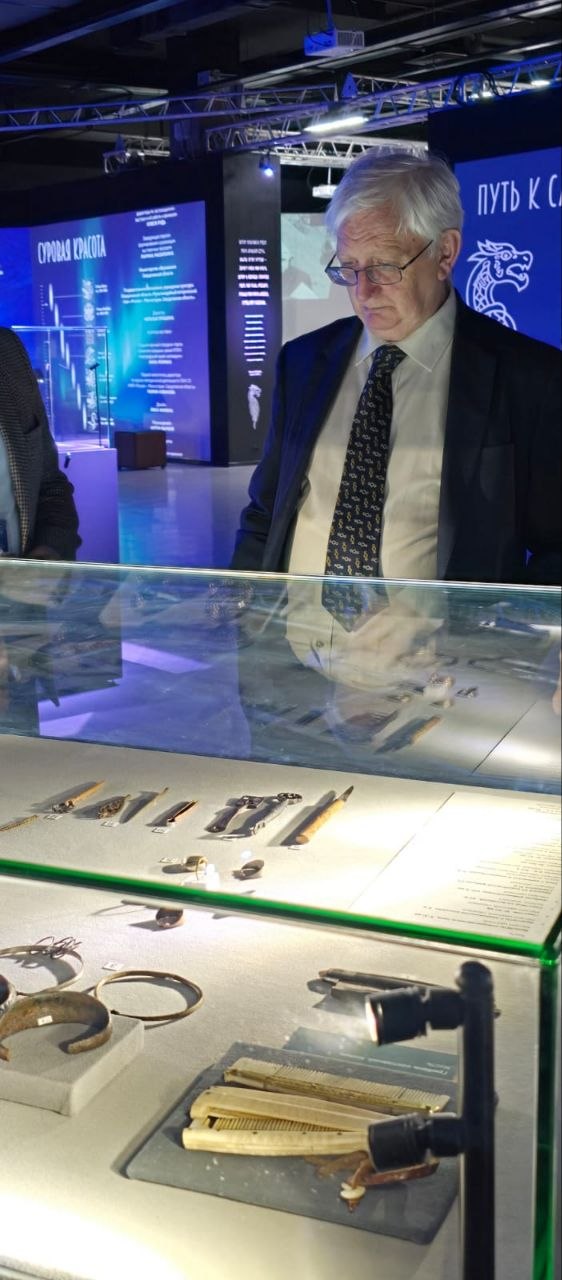
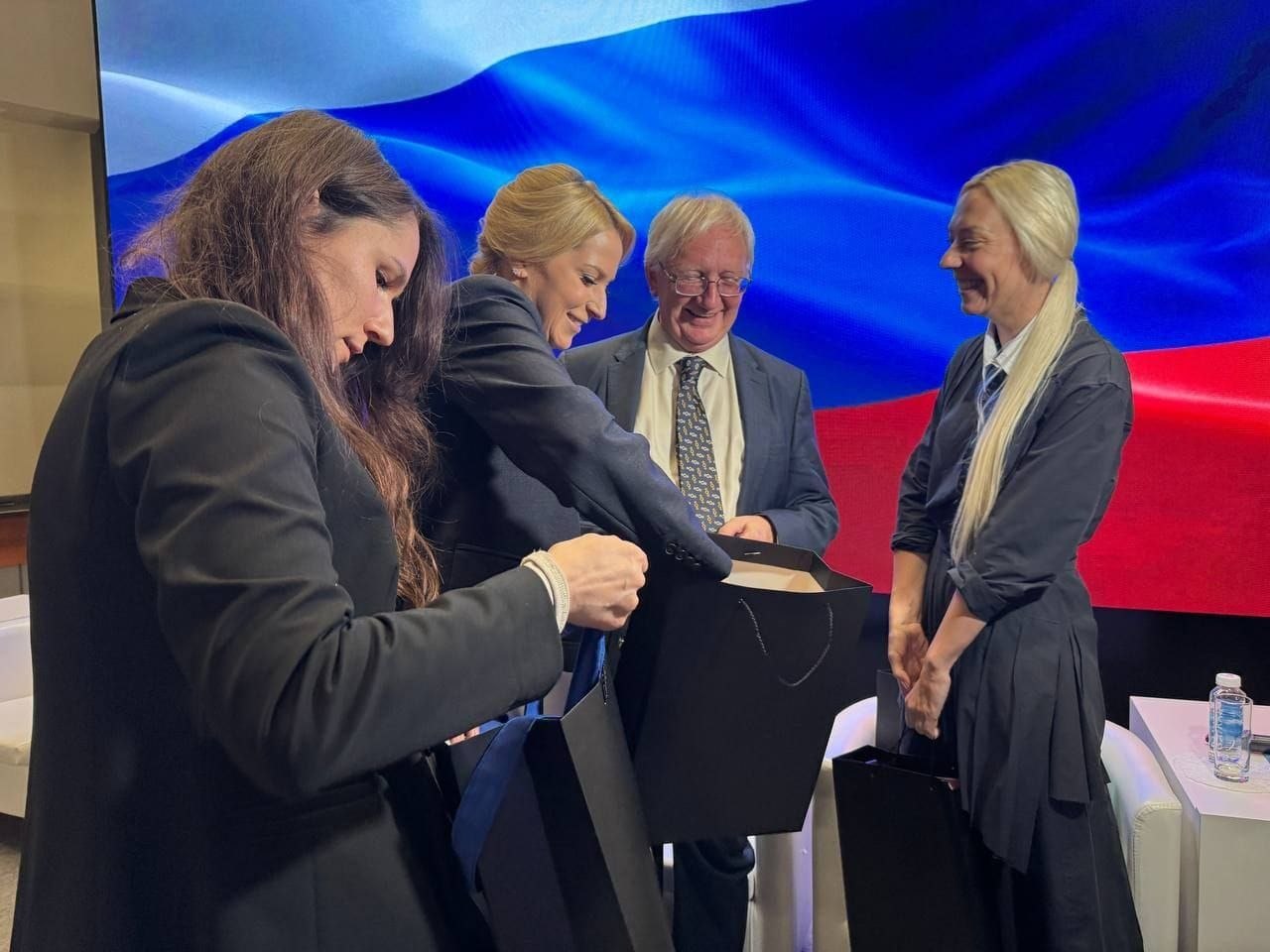
I was surprised a few weeks ago to get an invitation from Yana Lantratova, Russian Federal Commissioner for Human Rights, to deliver a speech on human rights to the International Youth Festival in Ekaterinburg. It is approaching 20 years since I was last in Russia, and I tend to avoid invitations from governments. But on reflection, I decided that the current official Russophobia of the West and the constant state of propaganda for war with Russia to which we are subjected make an overwhelming reason to go and take a look at the state of the country.

For the record, my travel and accommodation were paid for by the Russian state. I am long enough in the tooth that I do not think that in any way influenced what I said while I was there, nor what I write about it now. It undoubtedly influenced what I did while I was there because the Russian state organised my programme, though taking into account my requests. That is all information that you might wish to hold in your mind as you read this.

It would not be quite accurate to say that I went straight from a hospital bed to the aircraft, though there were only hours in between, my having been struck down with a particularly unpleasant bronchitis and a number of complications. I just had time to shower, pack, and hunt down the proliferation of electrodes and gauze and strip dressings in the shower, before leaving Edinburgh on the 22.00 Saturday night flight for Dubai, still coughing rather spectacularly.

I had been asked whether I wanted a hotel room in Dubai airport for a ten-hour stopover, before the flight to Ekaterinburg, and I had declined, not wanting to cause extra expense. This turned out to be a mistake. I had arrived on Emirates, but it turned out the next leg was a codeshare with FlyDubai, a kind of UAE version of Ryanair. I was therefore not allowed to hang around the materialist wonders of Dubai Airport, but consigned to Terminal 2.

This involved walking a considerable distance to find one particular lift, which I then took down three floors. Wandering around some kind of gloomy basement area devoid of signage, I then had to find my way around several corners to another lift, which I had to take up again one floor, arriving in one of those tarmac-adjacent steel and glass corridors equipped with hard steel benches, of the kind familiar to budget airline travellers around the world.

There I had to wait for 25 minutes for a bus, which took me and a few dozen other strap-hanging passengers to Terminal 2. The journey was of several miles and took a full half hour, on a vehicle which I am pretty sure had less suspension than the baggage carts which kept passing us. We passed through the entrails of the airport, its engineering, baggage, fuel, chartering, civil aviation administration and other areas, frequently stopping and lurching off again. I should not have been surprised if we had driven through the kitchens.

Eventually we were dumped out at the long, low bleak hall that is Terminal 2. Dubai as a whole is the most soulless place on earth, a thoughtless piling up of all the material things beloved of the most empty-headed worshipper of wealth. It runs on the tears of a vast exploited underclass. There is nowhere on Earth better at ruthlessly putting the socially inferior in their place. Having transited between terminals in scores of airports all round the globe, I have never encountered anything like Dubai in its complete refusal to pretend to make the experience pleasant or customer friendly. You know you are in the cheap seats.

It was at 2am the next morning that a pretty dazed Craig finally arrived in Ekaterinburg. What struck me most about the flight was realising just how far East we were as we transited the Aral Sea, about 90 minutes from landing.

Things looked up as I was met at the airport door and taken down to an official car on the tarmac. This whisked me to the VIP lounge, a separate building on the airport complex. Entering there, I had the first encounter of a kind that had been worrying me about the trip, as I explained in bad Russian that I have a pacemaker and could not go through the metal detector. In fact, this was greeted with immediate understanding and ropes were moved without fuss, so I could walk round the machine. This was to be my constant experience.

My programme stated that my arrival was organised by the Deputy Minister of Foreign Economic Relations of Sverdlovsk Region, Mr Ilya Skidin. I did not expect that to mean that he would be there shaking my hand at 2am, but there he was, and we sat down in capacious soft leather armchairs while waiting for my luggage to be retrieved. Ilya spoke excellent English and was wryly welcoming. He introduced me to Margarita and Irina, who were to be respectively my interpreter and my fixer, throughout the visit.

Margarita spoke English with no hint of any accent, and proved to have the best command of nuance and timbre of any interpreter I have ever known. She is freelance and had been hired by the Human Rights Commission for the occasion: most of her work is for private sector firms and for international institutions, particularly the IMF. Irina understood English pretty well but was reticent to speak it – rather my position with Russian. Once the baggage had been acquired, I met with the final member of what was to be our team, Ulugbek, a cheerful driver from Kyrgyzstan.

In my room at the Congress Hotel was waiting for me something I had requested in advance – a laptop and a phone. I have already had the experience of being detained at a UK airport under Section 7 of the Terrorism Act. This allows the police to confiscate your electronics without a warrant – which has happened precisely to me – and gives them powers to demand all PINs and passwords. You also have no right to remain silent when questioned. These powers have been used against so many people I know – George Galloway, Richard Medhurst, John Laughland, Kit Klarenberg, Johanna Ross to name but a few – that I had little doubt my electronics would be confiscated again on return to the UK. So I decided to travel without any.

I assumed, whether rightly or wrongly, that the Russian state would be monitoring every action on the laptop or phone. But as the British state at home, and indeed multiple Western states, have had surveillance on me for years, this was hardly a new feeling or problem. I was in any event too tired to use either that morning, and my alarm seemed to wake me for breakfast seconds after I set it and closed my eyes.

We now headed to the Governor’s Office for my first meeting, with the leadership of the law faculties of the Boris Yeltsin Urals Federal University, the Yakovlev Urals State University of Law and the Alekseev private law research centre. This was chaired by the Deputy Governor of Sverdlovsk, Vasily Kozlov, who spoke good English and was very affable.

I gave a very brief discursion on the current crisis in international law: the inability of the international community to restrain the Genocide in Gaza, the blockades of Venezuela and Cuba, the attack on Iran and US insouciance on the closure of Hormuz, the denial of the Dover Strait to Russian shipping. I also spoke of increasing authoritarianism in Western countries, particularly the reduction of protections for freedom of speech. I also raised the question of access to justice for poor people in terms of legal aid, for both criminal and administrative cases.

This was a rather scattergun approach, but on this first morning I wasn’t quite sure what to say to this particular gathering that would attract their interest. But in fact I received some clear and stimulating replies. One professor said he did not accept that international law was in crisis, and that people had been writing of the crisis in international law for at least seven centuries. The institutions and legal instruments were sound and temporary noise need not be over-analysed.

Representatives of all these institutions said that they had previously had good working ties with European and British universities and institutions, but that these had been cut by the European side. There were also now almost no European students. This led to a female professor at one of the universities setting out very plainly that the curriculum had consequently changed. They used to teach international and comparative law very much based on the Western liberal tradition of jurisprudence.

This had now changed and they looked more in comparative law at other, more successful models of the relationship between the state and individual, such as the Chinese model. This represented a different way of thinking at the most fundamental level, and posited an entirely different balance between the interests of the individual and those of the collective.

This was quietly and dispassionately spoken, but here on day one you could not have had a more eloquent and relevant example of how Western hostility, sanctions and withdrawal was turning Russia away from Europe and into the very thing the West claimed to fear.

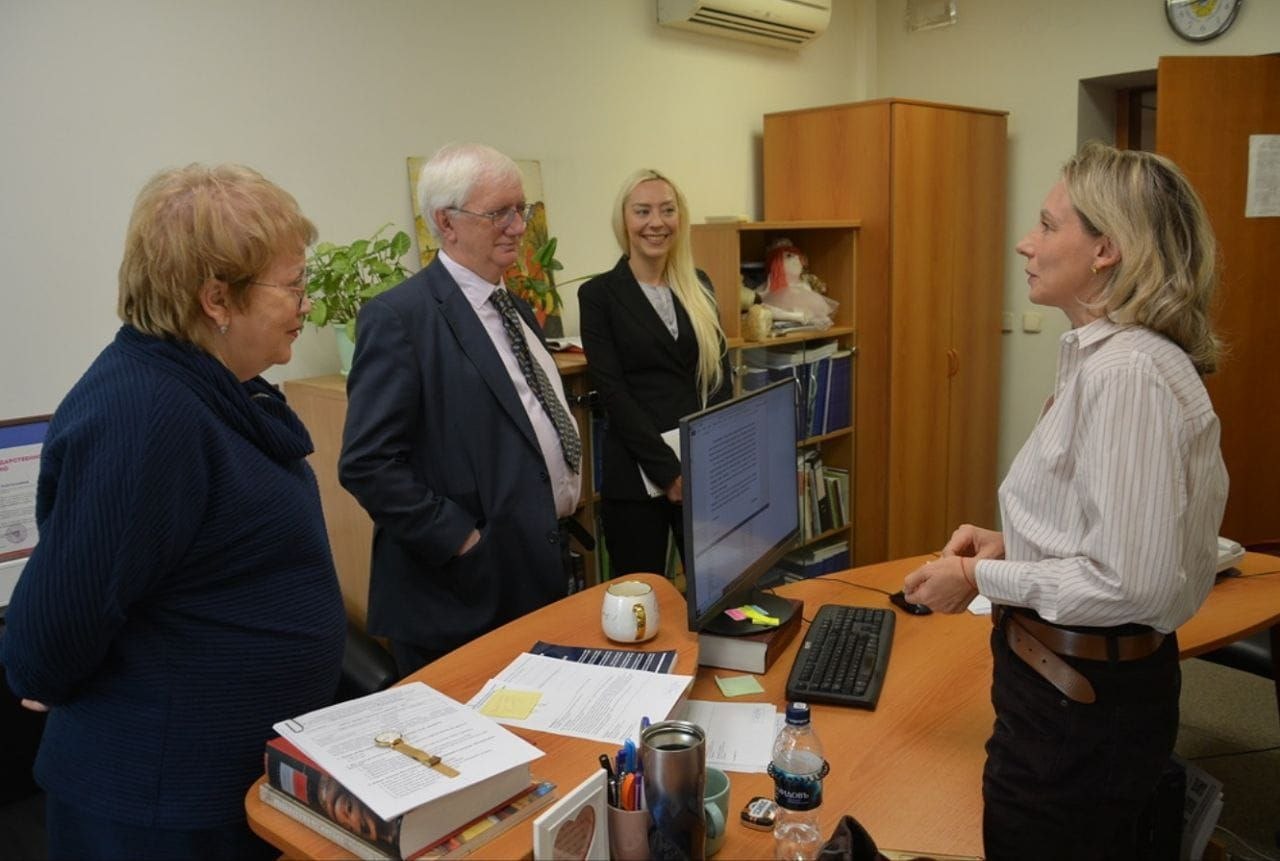
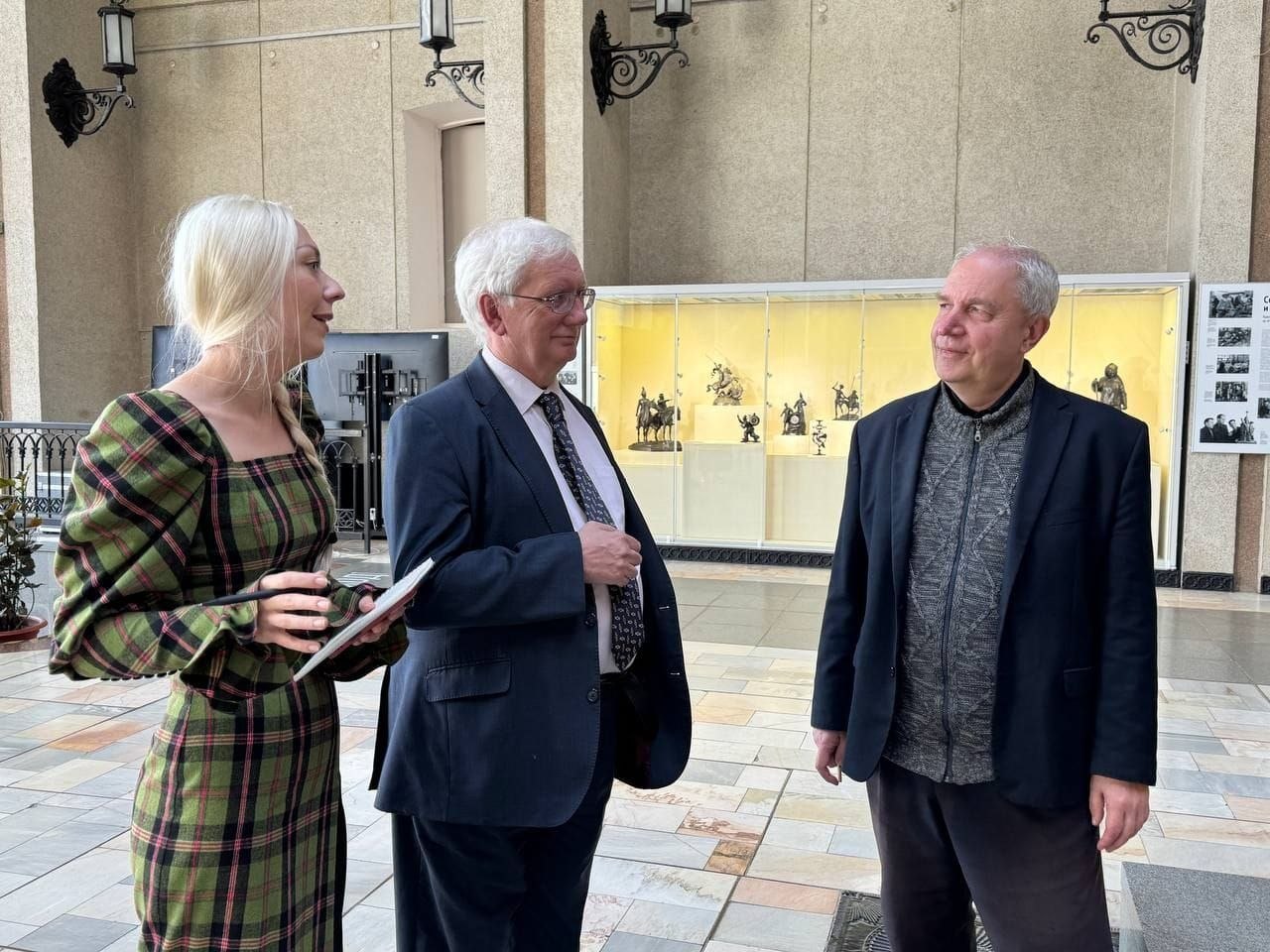
I was to give a lecture later in the programme to their assembled international law students, and everyone seemed genuinely enthused about that, including me. We finished with a group photo. The lady in the centre next to me is Tatyana Merzlyakova, the Sverdlovsk regional commissioner for human rights, of whom much more later, and next to her the Deputy Governor.


After the meeting we walked through a large web of corridors until we emerged in part of the building which is the Governor’s official residence, in the beautiful Sevastyanov Palace. We passed through a splendid ballroom with gilded columns and balconies and spectacular crystal chandeliers, before arriving in an elegant circular dining room which I suspect was within the rotunda in this stock photo.


Deputy Governor Kozlov was a genial host, and much of the time was spent discussing the rather spectacular repast of multiple local dishes – just the starters they gave me would feed me for a week. The meal was served without alcohol, which is a very definite change in Russian official culture over the last 20 years. I learnt that Sverdlovsk Region has a slightly smaller population than Scotland, but distributed over three times the area. It is extremely rich in minerals, timber, water and other environmental resources and a major agricultural producer.

Ekaterinburg was founded by Peter the Great specifically as a steel production centre in an effort to rival the industrial power of Sweden. More recently the bulk of Russian military production was famously relocated there during WW2, beyond the reach of German invasion, and it remains an important centre of the defence industry. Ekaterinburg marks what was the traditional border between European Russia and Asian Russia – somewhat confusingly as it lies 2,000 miles East of the Bosphorus. Ekaterinburg is just on the Asian side of the Urals watershed, and the waters of its river, the Iset, joining up with other great rivers, eventually flow into the Arctic.

Modern geology regards the division as irrelevant as there are no separate plates, and regards the whole as Eurasia.

The previous day the First Ministers of Scotland, Wales and Northern Ireland had held a summit to determine the right of their peoples to self-determination, and this had been featured with striking prominence in Russian media. The main Channel 1 television news had it as a lead story with a detailed explanatory piece of several minutes, and this appeared equally true across all channels.

The news also covered a meeting between Foreign Minister Lavrov and the Ambassadors of several states. In this meeting Lavrov told the Ambassadors that Russia viewed the question of the Independence of Scotland in the light of the UN Charter principle of self-determination. It is very significant both that Lavrov chose to raise this with the Ambassadors, and that Russia’s main media then highlighted it as a major point of the meeting.

Kozlov asked me about Scottish Independence and I told him that, while I could not give a precise date or method, I had no doubt it was inevitably coming. I quoted the consistent majority support for Independence in the polls and the complete dominance of pro-Independence sentiment among younger people. I also said that the United Kingdom had always been an imperialist construct and was still at the centre of much neo-imperialist mischief in the world today. But as the British Empire had crumbled away, so eventually would the metropolitan. Scotland, Wales and Ireland were the first colonies and would recover their freedom.

Deputy Governor Kozlov assured me of his longstanding personal support for Scottish Independence and said that it was a cause well understood by the Russian people.

Tatyana Merzlyakova, the Sverdlovsk state commissioner for human rights, had been with us throughout these meetings and appeared to be deferred to by all. Kozlov assured me that the organs of government in the region all listened to her very carefully and almost always took her advice, as he did himself. I was to see much more of Tatyana over the next few days.

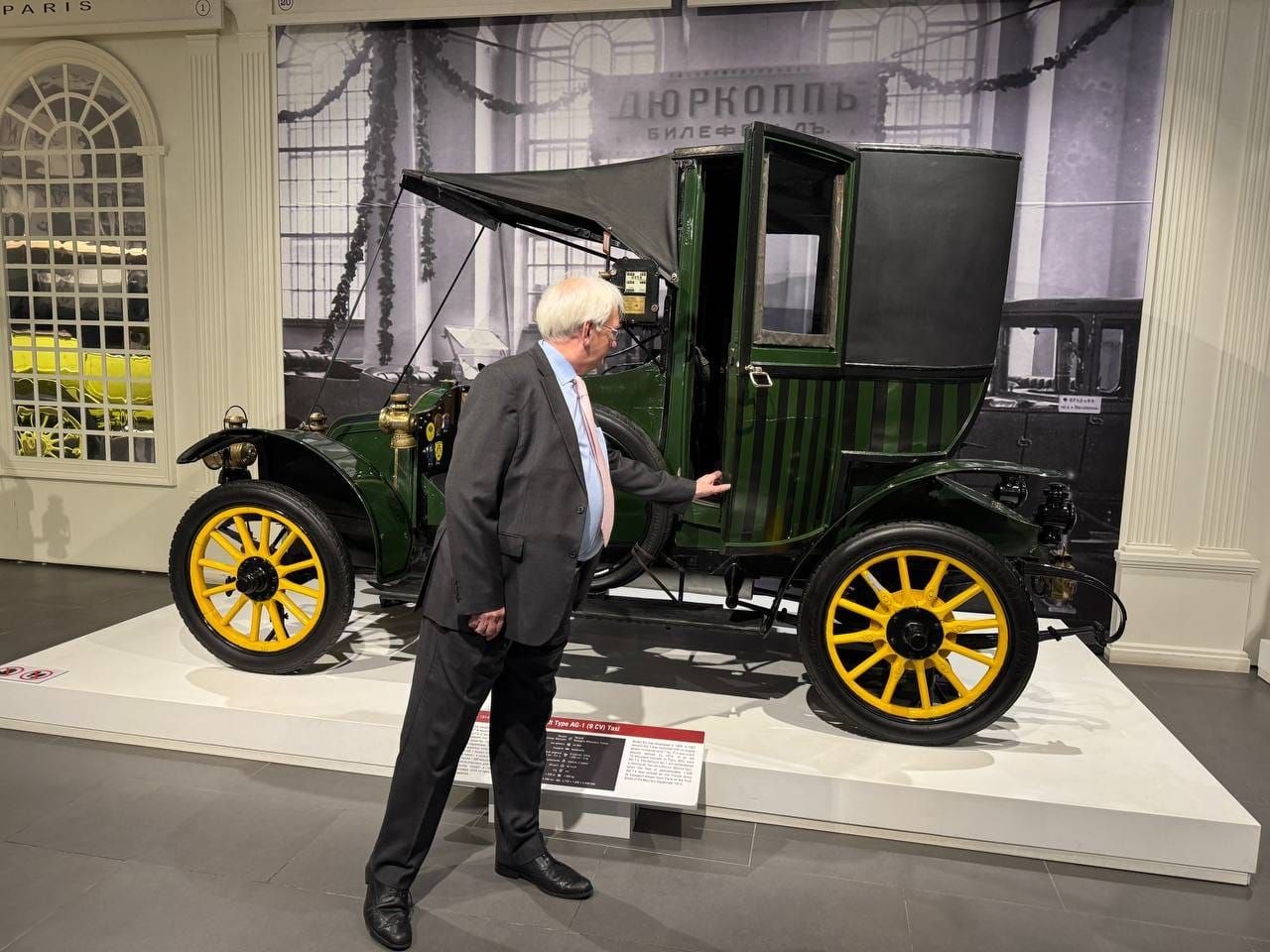
After lunch we drove to the Museum of Civil and Military Equipment. This housed a remarkable collection of vehicles, in particular some massive mining dump trucks which are the largest in the world, and one of which held the world record for transporting 560 tonnes of material in one lift. Moving indoors there was a really remarkable collection of automobiles from all round the world, from the earliest days of the internal combustion engine right up to modern times.

I skipped the collection of armoured vehicles and howitzers and (with some regret) steam locomotives, and breezed past the extraordinary assemblage of military aircraft in the yard. The museum director was so kind and enthusiastic I felt compelled to show rather more interest than I felt. We spent a long time looking at the Buran, the old Russian version of the space shuttle, and I recalled that the West had for many years been highly dependent on Russia’s International Space Station and launch vehicles for space exploration, a cooperation the West was not looking to reciprocate now it was again taking the technological lead.

I saw only a tiny percentage of this remarkable collection, which extraordinarily has been built up by a local private metals and mining conglomerate. The motivation for taking me there seemed to be a genuine keenness to give me experiences I might enjoy and to show off Ekaterinburg. We then swept off to the next destination, about 20 minutes’ drive through woods.

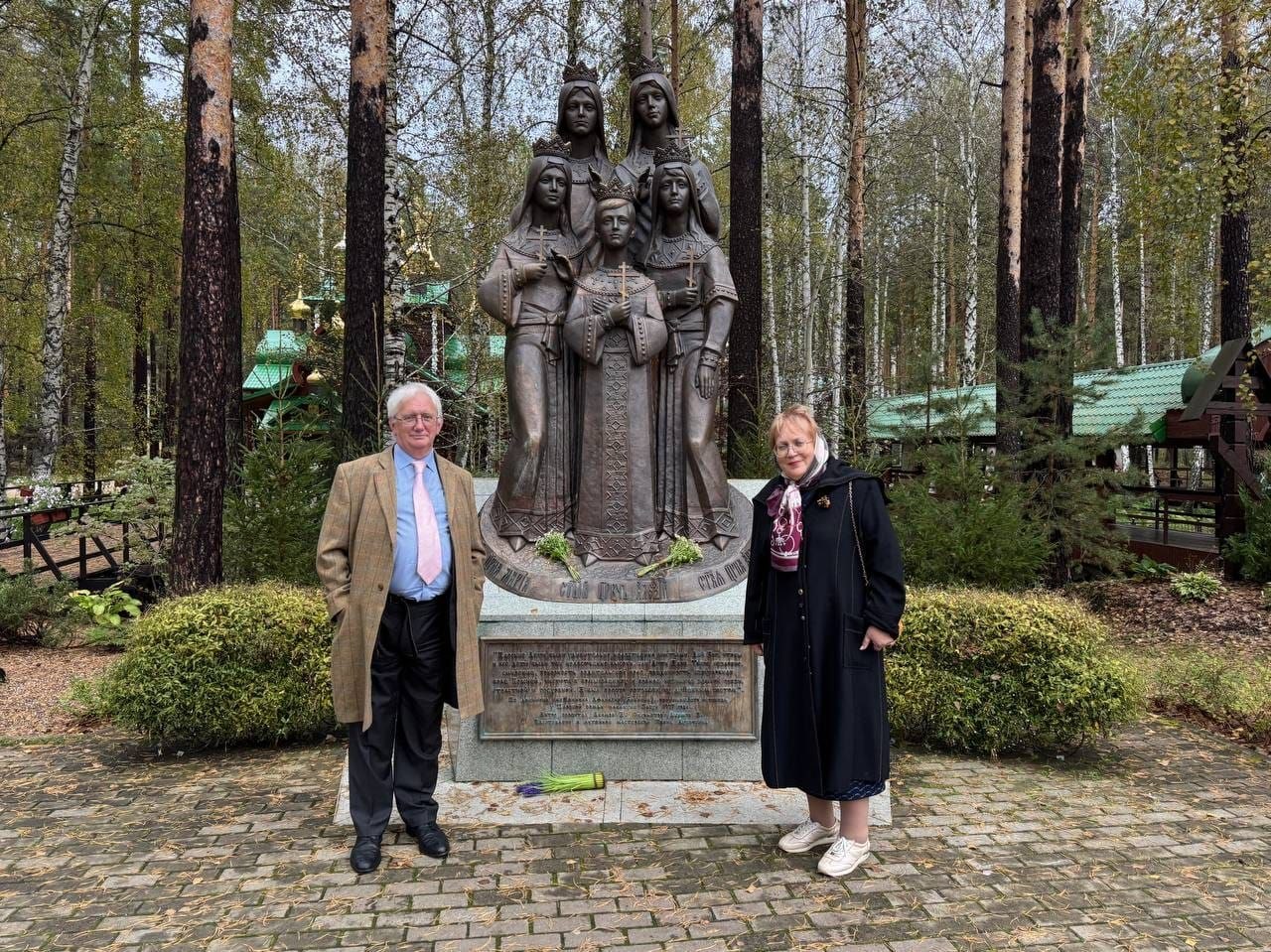
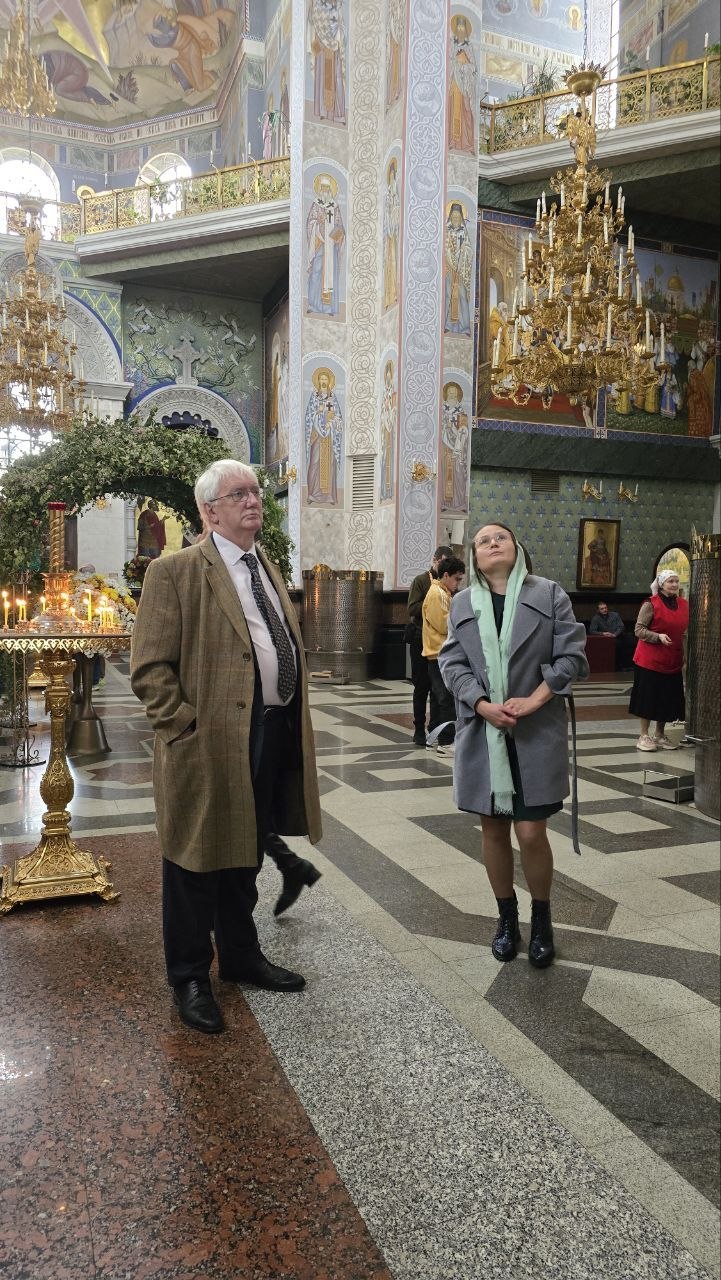
When the Romanov Royal Family were murdered in Ekaterinburg, the Bolshevik perpetrators had removed the bodies to a local mine. There they had been butchered, covered in sulphuric acid, burnt and thrown down a mineshaft (though some of the remains were taken on to a further site for disposal). That shaft in Ganina Yama was our next destination, and a monastery of seven churches was built on the surrounding site in 2016.

The Royal Family has been canonised by the Russian Orthodox Church and are viewed as saints. It was somewhat difficult to pin down as the reason for their canonisation was the pain and suffering of their martyrdom, and the precise distinction between saint and martyr is perhaps not exactly the same in Orthodox tradition as it is in Western Catholic tradition. But they are effectively saints. There is a tradition in Russian Orthodoxy of canonising national leaders – I was rather surprised to find that the distinctly earthbound warrior Alexander Nevsky, for example, is also a saint.

Tatyana accompanied me and it was plain that the religion and the slain Royals meant a great deal to her, as they appeared to do to most of those visiting. It was a very solemn place. I therefore listened with respect to our earnest young guide, and it did not require fakery to feel affected at the site where the children were dismembered. Only in the car after we left did I venture that perhaps it is much easier to feel warmth towards a Royal Family once they are gone. In the UK we do not have that luxury.

We next drove back to central Ekaterinburg to a restaurant for dinner which very much specialised in local food, and the table groaned with multiple examples of pickles and raw, lightly smoked or frozen fish of many varieties. Eating frozen flakes of raw fish is very much a Urals thing. I was very pleased we were joined again by Deputy Minister Ilya Skidin, genuinely because he is very good company and also because it gave me somebody I could drink vodka with, without which I find this particular kind of Russian diet somewhat difficult to tackle. Margarita and Irina had been with me the whole day. Tatyana was still going strong and we were swapping stories of human rights cases, and Ilya and I put the world economy to rights.

So ended a very pleasant first day in the hands of the Sverdlovsk Governorate.

I have not mentioned that the weather had been cool and wet throughout day one and my cough was not improving. I rather struggled out of bed the next morning, managed to get locked out of my room following breakfast and reported to Irina and Margarita fifteen minutes late. We now drove on some forty kilometres to the International Youth Gathering.

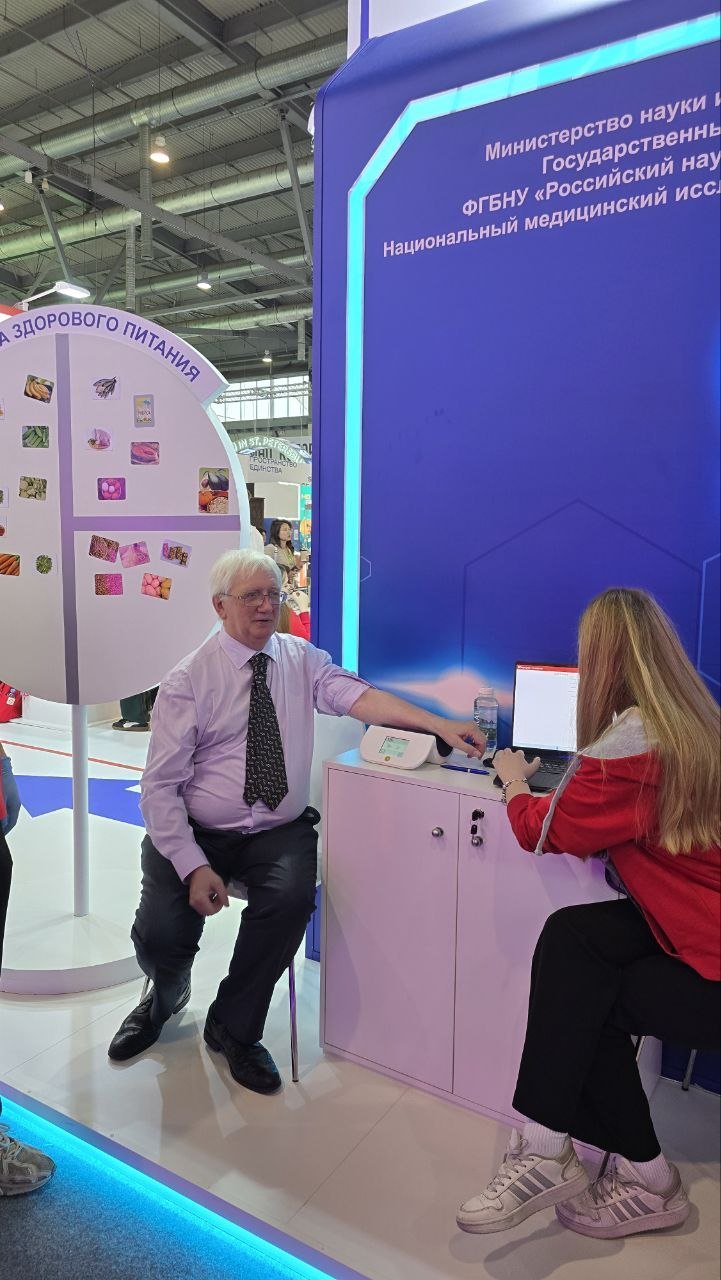
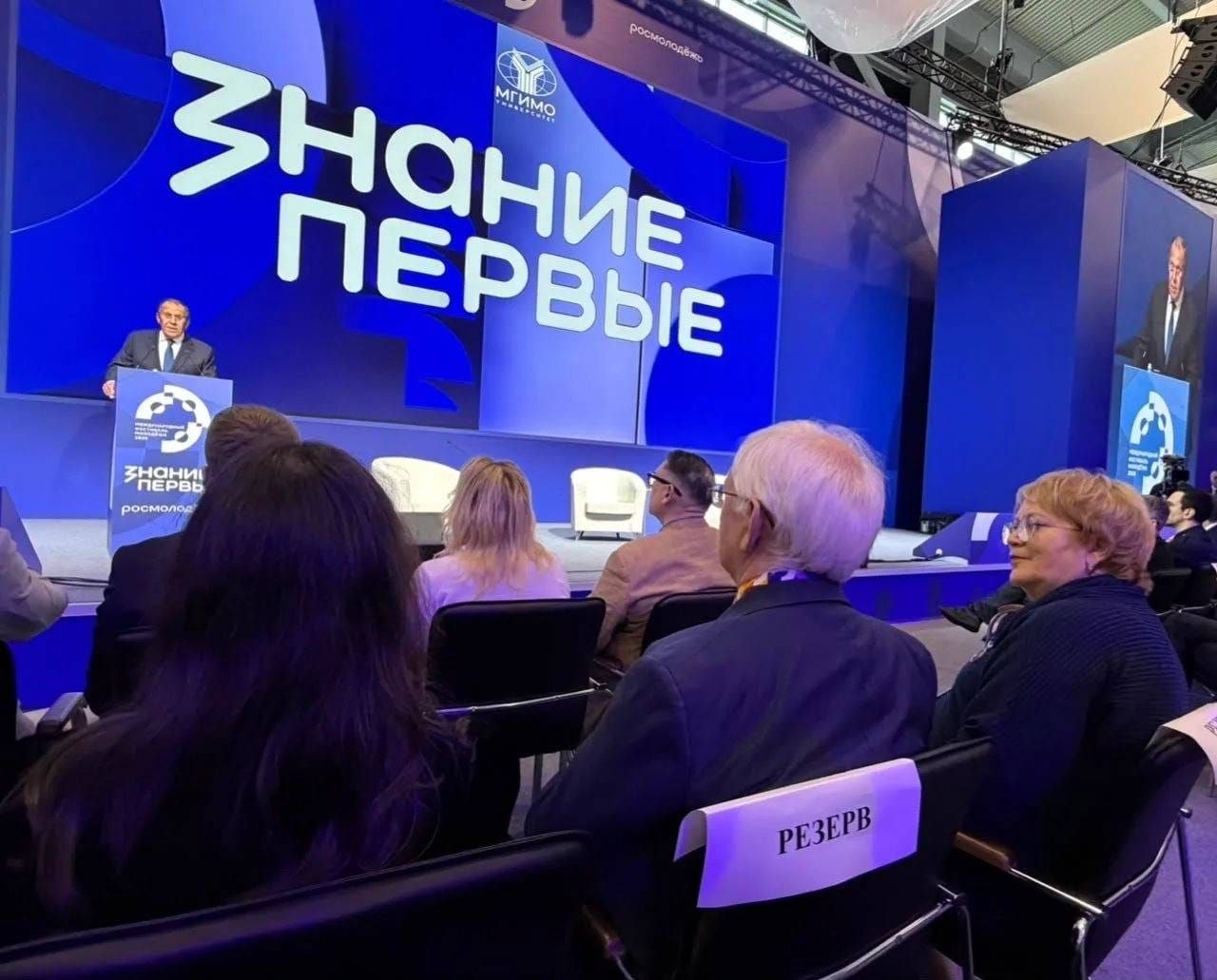
This took place in an enormous exhibition centre outside Ekaterinburg. There were reportedly 10,000 participants from 190 countries, and there were some national delegations milling around in flags and costumes, although the majority of the young people I spoke to were already resident in Russia, mostly as students. The exhibition was “international” in the sense of its congregation, not of the exhibits – while I probably eventually saw only about half the stalls, all I saw were Russian and designed to showcase Russia to the World.

My programme had me touring the exhibition from 10:30 to 12:00, and I genuinely enjoyed this. I spent most of this time in the technology section, where there were both exhibits and genuine experts willing to discuss matters such as nuclear fusion and plasma drives (though I left a ten-minute chat about the latter painfully aware I had not understood a word of it). I had a more useful chat on the difficulties of transporting and storing the hydrogen for fuel cell vehicles.

As in Venezuela, I was struck at a number of stalls by the way that Western sanctions had caused an explosion of technological development in payment systems, though I found everybody appeared blithely unaware of the civil liberties issues around fully digital and identity-linked currencies. I was however able to get a very useful explanation of the current state of BRICS international clearing operations.

A large rather scared-looking rabbit attracted my attention, and he turned out to be central to an exhibition on tissue regeneration. The technology has been developed by Rosatom to generate organs from tissue, is dependent in some way on DNA imprinting, and is said to be fundamentally different from stem cell technology. The rabbit was apparently the chief living recipient, was much older than you would expect him to be, and had homegrown replacement parts. He was a very famous rabbit and President Putin had met him twice.

The young lady explaining all this to me said that the technology might currently enable humans to live until 122 years old. I asked her why on earth anybody would want humans to live to 122 years old? Was the planet not fully burdened with humans already? There would be a massive explosion in numbers. Where would you put them all?

She looked rather nonplussed by this, as though nobody had put this to her before (which hardly seems likely). She replied that she herself would love to live to know her great-grandchildren. I suggested she might feel differently when she reaches my age. She presented me with a pair of replacement rats’ veins she had grown personally from the cells of a living rat. I reflected that I had not anticipated that my life would ever include being given rats’ veins by a beautiful young lady, and decided to move on.

At noon I was taken back to the entrance to meet with Yana Lantratova, the Federal Commissioner for Human Rights. The programme had us meeting together for half an hour, then visiting the stand of the Russian Federal Commission for Human Rights where the process for individuals to launch a case or an appeal would be shown.

Yana arrived, a very glamorous young woman in a designer outfit that bore its large label on the outside. She appeared warm and friendly as she shook my hand with an open smile, then disappeared into a huddle with a cloud of advisers. After I hung around a few minutes, Irina and Margarita explained to me that Yana had not previously known she was to give a talk alongside me, she had only expected to be introducing me, therefore she needed to prepare. I was to go to the speakers’ lounge and wait.

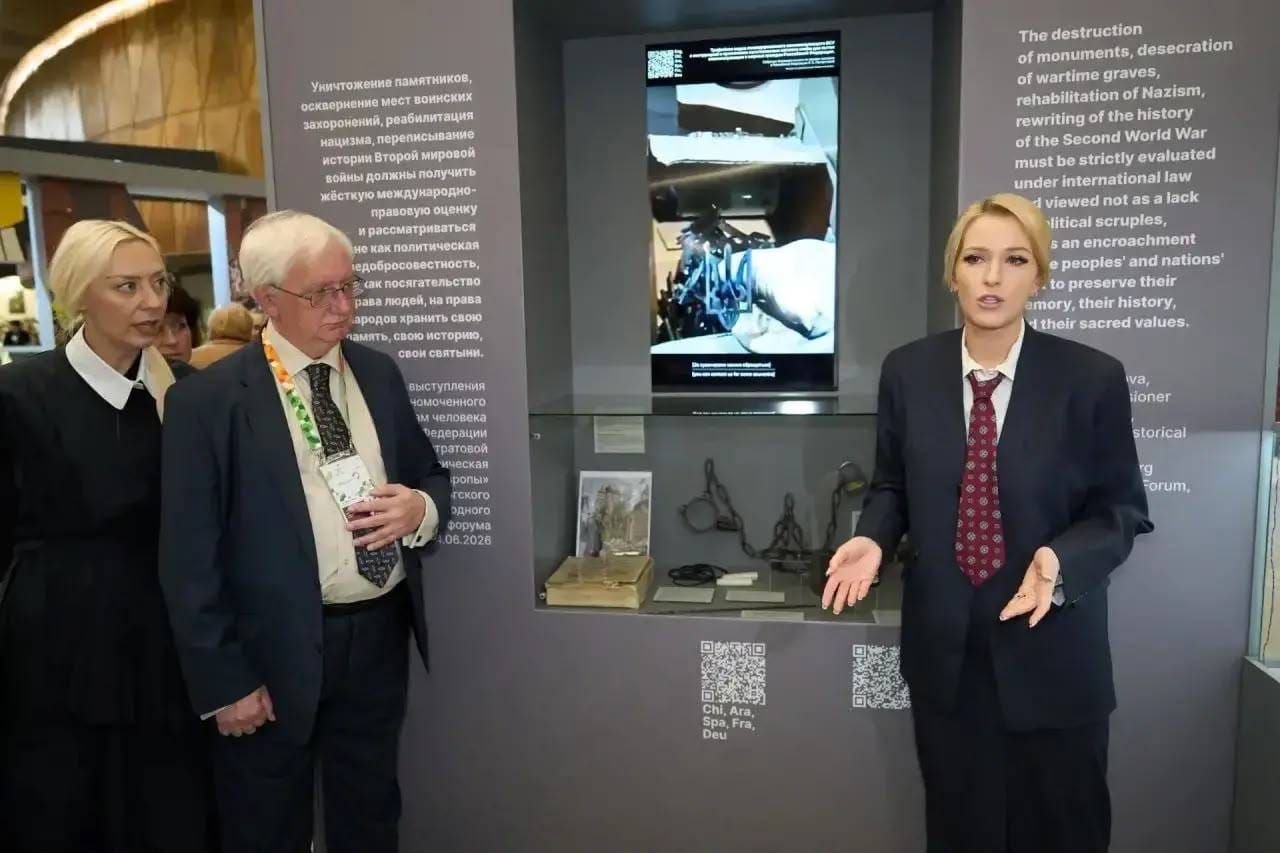
So we wandered up to the speakers’ lounge, where I sat for an hour or so drinking tea and doing nothing in particular, which suits my talents. Then suddenly I was hustled very quickly down to the exhibition hall, where I was wanted to hear Yana give a tour of an exhibition on Ukrainian atrocities against civilians in the Donbass.

Her tour was well underway when I arrived, and much of it was harrowing. She spoke of attacks on citizens of Donbass from 2014 onwards, and of a Ukrainian attack on an educational institute in Starobilsk in May 2026 in which 25 teenagers had been killed in multiple waves of drone strikes. She also spoke of glorification of Nazism in official commemorations and literature in the Ukraine, and had exhibits to illustrate all of these points.

I know the points she was making to be true, and while it is one side of a story, it is the side which is never heard in Western media, while the reverse story is relentlessly pushed. But I found myself personally in a strange position. I had been rushed in and physically pushed through the press of cameramen to be with her in shot as she spoke at the exhibits she had reached when I had arrived, but she did not acknowledge me in any way and when she moved on to the next exhibition I was faced with the prospect of physically jostling to remain in the limelight, which I declined. I watched the rest of the tour of exhibits with the small crowd of public following.

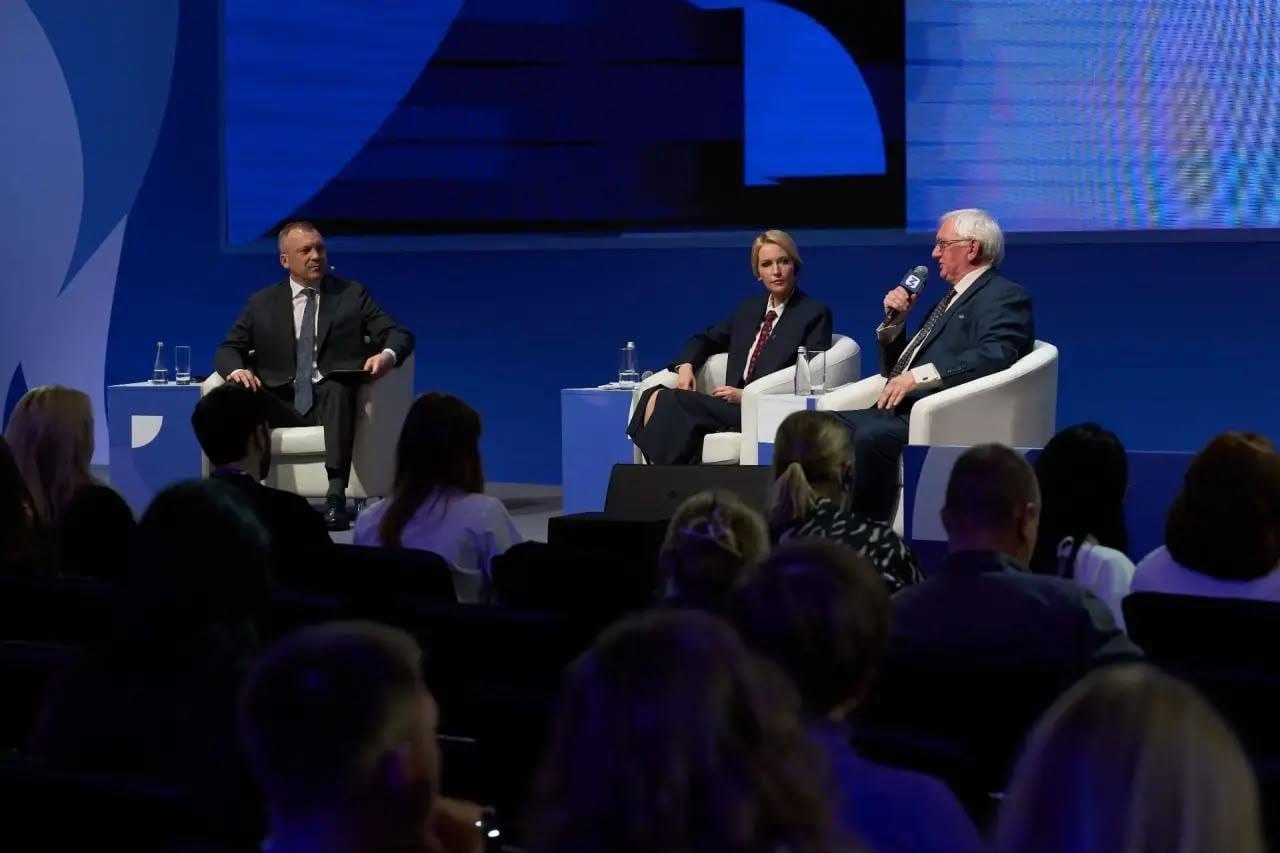
After this tour, we proceeded to the lecture theatre where we were to speak, in a discussion hosted by Evgeny Popov, a Russian federal MP. The talk was billed as a “discussion” between Yana and me on the subject of “The current state of human rights in the world”. I had been told we would open with 20 minutes each, and then take questions and respond to each other. I never write a prepared speech. I had however been given by the organisers a list of proposed speaking points – which related entirely to the Ukraine.

I did not object to any of them as they all appeared to be gleaned from my writings, but they seemed rather over-detailed for a general talk on human rights in the world. I sat down and, as is my usual technique, mapped out a few guiding words to carry me through a 20-minute talk.

These are the notes I wrote:

HAGUE GENOCIDE
LOST CONTROL NARRATIVE
REPRESSION THROUGHOUT WESTERN WORLD
TERRORISM CHARGES
MACKLEMORE
NON-FUNCTIONING OF WESTERN DEMOCRACY
UKRAINE
BANNING OF PARTIES – CHURCH – CULTURE
BALTIC STATES
MOLDOVA
DRUMS
CUI BONO

Drums being a reference to the Western beat for war with Russia, and cui bono of course who benefits from the warmongering?

Yana had still not said a word to me since the brief introduction, and something felt off even as we entered into the hall. The format was very much a modern Davos-style arrangement, with white leather chairs on a dais for the speakers, and simultaneous interpretation. Yana was introduced and rather overran her 20 minutes. She spoke exclusively of Ukraine, of the origins of the conflict, of the repression of the rights of Russians in the cultural, political, religious, educational and economic fields, of the attacks on the Donbass, of the genuflection to Ukrainian Nazism and of the extraordinary warmongering of the European Union and its politicians.

She spoke elegantly and well and said almost nothing with which I had any disagreement.

I then spoke and started by saying I had been considering what a young international audience could possibly find interesting in hearing an old man from Edinburgh address them. I then recounted my being in the Hague for the opening days of the South Africa vs Israel genocide case, gave some of the key facts, and moved on to my experiences of being in Southern Lebanon, and having been present when a twelve-year-old child was shot (but thankfully not killed) at Kfar Kila on the front line.

I spoke of how the access to true information by young people on Gaza from their mobile phones had broken the hold of state propaganda and placed populations at odds with a Zionist billionaire-controlled political class that they could not influence. The Western political elites had therefore responded with a wave of repressive legislation and arrests that had given the lie to the myth of Western democracies. I spoke of the 3,500 arrests of peaceful people in the UK under terrorism legislation for support of Palestine Action.

As I spoke, I was aware of Popov, the chairman, becoming visibly agitated. He was shifting uncomfortably on his seat and several times held up his microphone as if he wished to interrupt. I was determined not to allow him to, and was careful not to pause between thoughts and sentences. I referred to Western lies about Ukraine and Western claims of Russian genocide in Ukraine which are plainly untrue.

I said that in the fog of war it was difficult to get a true picture of casualty figures in Ukraine, but total deaths on all sides were around 400,000. Deaths of children on all sides were around 800 children. These precise figures might be disputed by either side but were certainly not out by orders of magnitude.

Any child’s death was terrible and there may well be individual instances of war crimes, but about 0.2 per cent of the dead as children was not abnormal in war.

Compare this to Gaza, where approximately 36% of the dead are children. This too could be disputed in precise numbers – and many bodies still lie unrecovered – but was not order of magnitude wrong.

The gap between 0.2% and 36% cannot be closed by any amount of marginal adjustment of the figures, whether from Ukraine of Gaza. Nobody could seriously dispute the fundamental difference. That massive killing of children is the difference between a war and a genocide.

Popov looked extremely anxious as I said this, presumably because this is not the Russian line on casualty figures, but he did not interrupt me until a few moments later when I said no nation has a perfect human rights record, including Russia, and the need for Yana Lantratova’s office as Commissioner for Human Rights was evidence of that. At this stage Popov outright interrupted and said that Russia strove for perfection in human rights, but we were out of time.

I had been given a substantial list of questions to be asked after the talk, which were evidently now not going to happen. But Popov said there was just time for one quick question, and the choice is very instructive. He asked for my opinion on Scottish Independence.

I said that as a Scot, I naturally wanted the freedom of my native land, and that the UK was the centre of much Western Imperialism and a main source of NATO warmongering. This drew the first heartfelt applause of the day from the audience. We then left the stage and Popov and Lantratova went off, again not saying a word to me.

I recovered the phone I had left with Irina, and she said it had been buzzing non-stop. There was a long stream of messages that had arrived as I was speaking. Do not mention Palestine! Lay off Palestine! Stop speaking about Palestine! Ukraine! If you need another example use Western Sahara! Talk about Ukraine!

Obviously my talk had caused some panic. It is worth noting that nobody had said to me not to mention Palestine before I stood up (or I would have refused the invitation).

I did not feel good about causing problems for the hosts who had been so very kind to me. I was left with the local team, who stoutly said that I had done nothing wrong, and Tatyana said she had told “them” that I had every right to say whatever I want.

I cannot pretend I know the reason for the extreme sensitivity on Palestine, but it is worth noting that in two days in the exhibition halls I did not see, among hundreds of socially aware international youth delegates, a single keffiyeh, which is improbable in any youth gathering in 2026.

We went on to give an interview to a local youth radio station, which went extremely well. They were very well informed on my history and views, had no worries about discussing Palestine or anything else, and it was a refreshing and enjoyable relief of the tension.

We then went on to the Russian History museum, where I toured an exhibition of the birth of the Russian nation in the fusion of Viking and Slavic cultures in Novgorod and Staraya Ladoga from the time of Rurik. The exhibition absolutely fascinated me, consisting of finds from recent very extensive archaeological digs. There is something deeply fascinating in the physical confirmation through finds of written chronicles and oral traditions, and some of the exhibits were extremely well preserved. The professor who escorted me was deeply knowledgeable and I think surprised I was so genuinely interested.

The Minister of Education of Sverdlovsk Region had joined us for this occasion, and the museum tour was to be followed by an event in the same venue, which had been advertised as a meeting with civil society, but heavily tilted towards veterans, families and refugees from the Ukraine war and their representatives. Yana Lantratova and I were both slated to address them and, as this was specifically a Ukraine-related event, it has always been my intention to discuss only Ukraine on this occasion.

Yana gave a very similar talk to the one I had heard twice before that day, with added references to the heroism of those defending Russia. I spoke of the war not having started in 2022, but the conflict dating back to 2014 and beyond. I spoke about the use of Ukraine by NATO to bleed Russia and facilitate its Western expansion, while Ukrainians died to no good purpose. I spoke of the madness of risking nuclear war over the precise boundaries of a state that had never had a historical existence until 35 years ago. I added that by the same token it should not be for Russia to insist on precise boundaries of the Donbass as a precondition of peace.

Peace itself was what the World now desperately needed. It was deeply painful to me to see Russia’s place at the heart of European culture denigrated and denied. It was painful that I came from a country which was pouring money and missiles into Ukraine with the express intention of facilitating attacks on civilian targets deep inside Russia. I spoke again of the devastating effect of authoritarianism and militarism on Western societies. I spoke of the farce of pretending this was a war for democracy when Ukraine had abolished all opposition political parties and groups.

I explained that I had needed to travel without electronics due to my fear of arrest at the airport on return, and outlined the National Security (State Threats) Act 2026 under which I could be jailed for up to twelve years for publishing any information given me by a Russian government source, even if – and perhaps especially if – it were true. Information itself is specifically defined as a “material benefit” in terms of the Act.

There was an interesting discussion afterwards which included several civil society groups praising the work of the Commission for Human Rights, and particularly Tatyana, in projects such as obtaining better access for the disabled to rural healthcare facilities, and providing various aids to the blind. Several veterans thanked me very much for coming, and being prepared to face the Russian people and talk so candidly.

One lady who spoke was from Central Asia and wearing traditional dress, including a hijab. She represented an NGO which works for the rights of national minorities in Sverdlovsk Region. She said they worked for many years with the assistance of British NGOs, but that all help, cooperation and even contact had now been withdrawn, which she very much regretted and which hampered their work on education, health and migrant workers. She asked why this should be. I replied it was obviously extremely disappointing. It was in part a measure of Russophobia in the UK, and of fear of official sanction. It also perhaps reflected the fact that a great deal of the NGO sector in the UK is misnamed and in fact heavily reliant on government finance.

After this meeting concluded, Yana Lantratova presented me with a number of gifts, which she did with grace and humour; a painting, a scarf and some vodka.

She was then hustled out again. My programme said I would be having dinner with her, but after arriving at the restaurant we were told that she would not be joining us. The dinner consisted of Tatyana, Ilya, Irina, Margarita and me and a couple of others from Tatyana’s office, notably Evgeny Batukhin, who had very much become a member of the core team. The dinner was in a delightful restaurant featuring Caucasus dishes, and we had a jolly evening. The topic of what had gone wrong was not taboo, and the general consensus was that Yana was surrounded by a team inclined to panic and be over-protective towards her.

The next morning I woke feeling rather less ill, and looking forward to the day. It started with a visit to the Regional Human Rights Commission offices of Tatyana and her team.

To be honest, I started from a deep scepticism about the genuine independence and commitment to human rights of the Federal or Regional commission. My scepticism was informed by experience of the parallel institution in Uzbekistan, where it was simply window dressing for a deeply authoritarian system. A morning with Tatyana and her team persuaded me I was wrong to be sceptical of them.

If I can give you a single proof of this, it is that one of Tatyana’s team is a highly impressive international human rights lawyer who had four times been to the European Court of Human Rights on behalf of clients claiming abuse by the Russian state, and had four times won. Russia’s suspension from the Council of Europe had closed that particular avenue for now, but here she was, still employed in human rights work by the Russian state. That is not the kind of thing you are told in the West about how the Russian state truly functions.

We discussed the kind of classic human rights cases we might consider typical. Tatyana’s team had intervened in the cases of many who had been accused of “publishing false information” over the war in Ukraine. She said that they had been able to convince the courts, even the military courts, that such offences were best dealt with by admonishment and a small fine rather than imprisonment.

But their work went far wider. They dealt, for example, with housing problems – decent housing was viewed as a human right. I met the highly experienced and qualified staff who were working on this – many were lawyers, and almost everyone had a doctorate. They also got involved, for example, over pay and conditions of private sector workers, when employers failed to meet their obligations. The whole gamut of rights for the disabled came under their office. So could cases of environmental protection.

I saw the complaints and requests from citizens piled high on desks; I saw citizen walk-ins being interviewed. I heard accounts of successes, where Tatyana had prevented the privatisation of an emerald mine against which miners were striking, and intervened to stop gold mining contaminating a pristine water source. Evgeny explained to me that Russian government is not a monolith; they have powerful allies but also those who were not appreciative. The total Sverdlovsk team was about 30 professionals, plus a cloud of volunteer NGOs.

I had been expected, but nobody had limited what I could ask, and I was allowed to pull case files at random and ask about them. I left genuinely very, very impressed.

The next event was to be my talk to international law students, which I now noticed was to be another joint event with Yana. Irina told me that this had now moved and would not be at the Urals Federal University as previously planned, but at the new university campus at the Expo Centre where the International Youth gathering was happening. So we headed off there yet again.

On arrival, I bumped into Yana briefly and said hello, but she was once again swept away. I was led into a classroom-style waiting area, and sat there with Margarita and Irina wondering what was happening, as the advertised time for the talk came and went. After some time twiddling my thumbs, I was led into another room, where Yana and Tatyana sat, surrounded by Yana’s staff from Moscow. They looked startled to see me come in, and I felt I was interrupting something. I was motioned to sit in a chair behind Yana and looking at her back. This seemed daft so I stood up and moved the chair round to the front of her – which to be fair, one of her staff helped me to do.

We finally got to have the conversation I felt, rightly or wrongly, that I had been deliberately kept from having with her. I expressed my gratitude at the invitation, delight at how well I had been treated, and admiration for what I had seen of the work of Tatyana’s office.

Yana replied that everybody had been talking about how moving my speech was at the evening meeting on Ukraine the day before. Had I noticed that professional cameramen had actually stepped out from behind their cameras to listen to me? She had not seen that before. I said I was glad if the heartfelt nature of my sentiments had come over. We discussed a little bit what could be done to get others in the West to at least listen to the Russian narrative. She had found Western media entirely hostile. I suggested that mainstream media was currently a lost cause, and much more could be done on social media.

I suggested that presentation should not start from claims of perfection; it was powerful to admit things that had gone wrong. Yana said she always tried to reference mistakes she had herself made. I told a couple of self-deprecating anecdotes about my own cock-ups. I felt that I had finally begun to form a human connection with the person who had issued the invitation to me.

Yana then explained that the coming meeting with students was scheduled for one hour. She would talk for half an hour, then would introduce me. I could speak as long as I liked and leave the remaining part of my half hour for questions. We then went into a classroom which had about 50 chairs, of which about half were full. The audience did not seem very engaged and people wandered both out and in during the event. Yana gave essentially the same PowerPoint presentation I had already seen three times now. At the end of it she introduced me fulsomely, then she and Tatyana stood up and left the room together, much to my surprise.

I was left on my own facing about twenty people who were fairly plainly in the international youth delegate category, and not the international law students I had been expecting to address. I had mentally prepared specifically on international law points, and decided to go through with these. I will not bother you with them except to say that I spoke of the meaningless propaganda designation of “shadow fleet” to justify piracy of Russian tankers. I gave in detail the example of the vessel Smyrtos seized by the British Navy off the Isle of Wight, after its Cameroonian flag registration had been withdrawn while the vessel was at sea, following British and French pressure on the Cameroonian government.

There were no questions from the audience, but afterwards one Russian student came up to me and asked how a person could verify truth from untruth in these difficult times. I stated it was very hard, but my advice was to be sceptical of official narratives. He then made it plain he did not accept what Yana had said about neo-Nazi influence in Ukraine. I told him that my take was that everything that Yana said was true, but of course it was not the whole truth on the subject. Research and an open mind are key.

We then wandered back into the youth festival again. I looked through the literature stall, and placed my left arm in a machine that was said to estimate your medical age. Mine came out somewhat improbably as 48, rather to the consternation of the young lady administering the test. It is good to know that while I am pretty knackered, my left arm still has many years ahead of it.

The next item on the agenda was to be in the audience for a talk Foreign Minister Sergei Lavrov was to give at the Festival, in the same venue that I had mentioned Palestine. The programme also stated that I would be seated in the audience with Yana Lantratova but, true to form, the enigmatic Yana had returned to Moscow. There was rather an anxious press of people hoping to get in. I met there three of the law academics I had met on the first day. They had just come from the university where they had waited much of the morning with hundreds of international law students who had been awaiting my lecture. They had not been told it was called off until well after its supposed time.

I apologised deeply and said I had no idea at all what had happened. I had been told the venue was switched. This was quite truthful. I do not know if the lecture was effectively cancelled because of me, or just as an administrative convenience for Yana’s programme. I felt very bad to have let the university down.

So I found myself sat in the front of the second row with the indefatigable Tatyana. I was immediately behind the equally formidable Maria Zakharova, foreign ministry spokesperson, and more to the point behind her still more formidable bank of hair.

Lavrov spoke for over an hour, and with the fluency one expects of him, on the arrival of a multipolar world. The Global South and East, he said, were no longer content to be extras in somebody else’s system; new centres of gravity in Eurasia, Africa and Latin America were insisting on their own interests and their own resources. The West treated this as an assault on a birthright rather than as history moving. Sanctions, pressure and the stirring of conflicts were the methods of a dominance that could feel itself slipping.

The UN Charter, applied in full and as a whole rather than picked over for convenient articles, already contained the only workable law of a world of equals: sovereign equality, non-interference, the settlement of disputes without the minority claiming the right to dictate. Reality, he suggested, was forcing even those who had never much believed in that equality back towards the Charter, because the alternative was a permanent emergency in which rules were what the powerful said they were.

Lavrov then answered questions for over a further hour. Unfortunately those asking the questions were the participants in an international seminar for young diplomats that, for some reason, was also taking place in Ekaterinburg. The questions were therefore achingly dull, from young careerists representing the interests of their countries. The tedium was broken occasionally by Lavrov losing patience, but there were a couple of points of real interest to me.

The first was that Lavrov went out of his way to mention Scottish Independence. He mentioned again, as he had to the Ambassadors two days earlier, that the Russian attitude to Scottish Independence was governed by the principle of self-determination as specified in the UN Charter, and that Russia rejected the hypocrisy of Western powers which asserted the principle of self-determination over Kosovo, but advanced the principle of territorial integrity against it when it came to Crimea.

Lavrov went straight on from this point to say that Russia thought UN structures were correct and in general opposed substantive UN reform, but the position of the P5 on the Security Council was interesting. The UK was obviously not the great Imperial power it had been in 1946, and Africa and Latin America were badly under-represented. He mused on this specifically in the context of his immediately preceding remarks on Scottish Independence.

As I have spent the last two years briefing Russia’s most senior diplomats on the question of Scottish Independence and specifically its opening up the question of the UK security council seat, I was obviously thrilled to hear Lavrov voluntarily go there.

Lavrov also spoke of Western illegal interception of Russian oil, and of the legally empty use of the term “shadow fleet”. He narrated the story of the oil tanker seized after its Cameroonian registration was revoked under the pressure of Western powers, while the vessel was at sea. Margarita afterwards noted that Lavrov had spoken in the identical language to me just before on this incident. I said that we were both quoting my blog post. I had not merely published the story, it was I who had researched it and discovered what had happened in Cameroon regarding UK and French aid threats. Lavrov did not namecheck me, but he did separately namecheck John Mearsheimer, a sign that alternative media does count in Russia.

Yet again Yana and her team were hosting me for dinner, with Ilya having finally given up and Evgeny taking over the vodka toasting role. There was no reticence in talking about the misfortune of the cancelled university lecture and what had caused it; though nobody seemed to know much more than I did. Ulugbek drove me back for a relatively early night, while Irina and Margarita went off to buy another suitcase to pack the great volume of gifts I had been accumulating.

When Margarita and Irina arrived the next morning, we noted that the real work of the visit had been done. There were no more meetings or speeches planned. Our first stop was at the Urals Museum of Fine Arts – where yet again Tatyana was waiting for us.

The museum highlighted its collection of fine cast ironware, and particularly a tented pavilion which had won prizes at the Paris Exhibition of 1900. I was given a tour of this by the curator who explained every item in detail. We then looked at a number of other cast iron items, all finished in a charcoal-based black paint.

The sculpture and the casting really were remarkable, and I could fully appreciate the difficulty of achieving such extremely fine detail in cast iron – and was prepared to accept that this was a world best by the local foundries at the end of the 19th century. But what I could not understand was, why? The materials for making bronze were readily available, so why this determination to do something intricate and delicate with extremely difficult cast iron?

We proceeded to look at other items of which the curator was deeply proud, in stonemasonry and local gemcraft. It was indeed impressive and enjoyable.

We next moved on to the Church on the Blood, the cathedral built on the site of the murder of the Romanovs, after the Ipatiev mansion in the basement of which the murders had taken place was demolished in the 1970s.

The church was much prettier, and less heavy, inside than I expected, with a really pleasant colour palette throughout in light blues and yellows. The lower floor included some wonderful iconography and the actual site of the basement where they were shot, painted and illuminated in a lurid red. You could not enter this area but viewed it from a scarlet platform above. A priest intoned prayers for the dead, in which visiting women joined with wailed responses of Alleluia.

We then proceeded to the museum in the nearby Archbishop’s residence, where there were a number of interesting exhibits and photos, including an alleged telegram from Zinoviev in St Petersburg to Lenin in Moscow, which appeared shorter and more explicit than the famous Zinoviev telegram of 16 July 1918. Other items – family ration books, embroidery by the girls, a birthday card from the Tsarevich to his father – are affecting but less historically interesting.

I was left again pondering where all this Tsarism stands within Russian nationalism. The cult of the Royal Family is of course particularly centred on Ekaterinburg. Russia is not a secular society – in opinion polls around 80% of Russians describe themselves as religious, the large majority of them Orthodox but including a large Muslim minority. Religiosity is not declining, and the position of the Orthodox within Russian nationalism appears to have government support, including a strong emphasis on conservative family values. At a time when the nation is embroiled in a war and facing threats of much wider attack, that narrative is important.

I think we can say that official history designates the Bolsheviks as bad guys. When I last visited Russia I found the human rights community concerned at a possible rehabilitation of Stalin. That does not seem to have happened in any wide sense, though the achievements of the Second World War are still more central to the national narrative.

I had made one final request before departure, and that was to visit a supermarket. I wanted a normal supermarket for everyday Russians, and found one from a national chain that sits somewhere about the Morrisons market position. The car park was full, but not of new or high-end cars. I had deliberately avoided an elite supermarket.

I found it extremely well stocked, with everything that you would find in your local supermarket. Fruit and veg were priced lower than in the UK, and there was no shortage of imported exotic fruits. In dairy, there was a very good selection of locally produced fresh goods, again cheaper than the UK. Foreign brands like President and Parmalat were readily available, and seemed to me very slightly more expensive than in the UK.

There was no sign of any absences through sanctions – Lipton’s tea and soft drinks, Coca-Cola from Abu Dhabi or much cheaper Dobry Cola produced by the local ex-Coca-Cola bottler. Sanitary products and OTC medicine appeared perfectly normal. Wines were very similar to what you would find in your local supermarket, both in range and price. There were several blended and malt whiskies, a bit cheaper than in the UK. Beer ranged from 50 pence for 330 ml of a local brew, to £1.80 for a Grolsch.

The most startling exception was the meat counter, where again everything was available and very much cheaper than in the UK, perhaps half the price. In short, the majority of staples – milk, oil, cheese, meat, vegetables, local fruit – were substantially cheaper than in the UK, while other products were on balance a little cheaper.

It is also worth noting that eating out was far cheaper than in the UK. For the standard of restaurant we had been frequenting, prices were about half. It was also notable that we were, every single time, immediately offered Grey Goose vodka and French wine in restaurants. You had to positively request Russian.

It is often worth noting at this point that I witnessed absolutely no queues for fuel at garages. The streets were very clean. Housing and public buildings looked in excellent condition, with no signs of dilapidation, including in large public housing blocks. I saw no homeless person or beggar and encountered in four days of going all round the city and outside it, not one single bump or pothole. As a public good, the city appeared in far better condition than those of the UK.

We went on to an interview with a local television station, which was very enjoyable and overran from 15 to 40 minutes. We then had our final lunch together as a team, for which Tatyana rejoined us – she had been away most of the morning preparing election observation duties. I then returned to the hotel and changed into my kilt and full Highland rig. The final item on our agenda was a ballet Gala at the Opera House and performance of Le Corsaire.

Here I am arriving with Tatyana and Evgeny. I am sorry for the absence of Irina from all these photos – it was her taking them!

This was a world premiere of a new adaptation. I am afraid to say I did not find it terribly successful. It combined a radical new treatment, with a new score, elements of modern dance, container ships, supercars, people trafficking and very dodgy racial stereotyping of Arabs, with long segments of the original ballet with original costumes, music and choreography. The effect was dissonant and largely nonsensical. The second half was very largely from the original. The professional standards in all disciplines were high, though the prima ballerina in particular appeared more at home in the modern segments.

It was the season opening gala and therefore brought out the local elite in full fig, both the Bohemian artist set and the wealthy oligarch set, the latter with a stunning display of trophy wives and girlfriends and great glitter of jewellery. I did not feel in the least out of place in my kilt, and posed with a great many people for selfies in the reception. Byron of course was a Scot, so there is that excuse.

The kilt being a great icebreaker I had any number of enjoyable conversations. One that particularly stuck with me was with a clinical psychologist whose main practice is administering polygraph tests. She said that couples frequently come to her for joint testing over infidelity or marital dispute and she always tries to persuade them not to do it. It almost never helps and never ends well, if not over the suspected event then over something else. I am obliged to say I did not meet anybody who was more impressed by the ballet than I was; Russians tend to be refreshingly candid.

But here is a thought. Here with my nationality obvious from my attire, and throughout my visit when I had met scores of people in everyday situations, I received no hostility from anybody. On the contrary I received constant kindness, hospitality and consideration. This from a population which is acutely aware that it is under missile attack with missiles supplied from the UK, and where the Western powers, including the UK, are openly and regularly threatening war.

Yet in this circumstance I did not only encounter zero personal reserve or hostility, I did not hear a single threatening or aggressive posture. Officially, Lavrov spoke of a multipolar world, support for the United Nations, the rule of international law and the rejection of violence. Nobody at any stage, including injured veterans from the Ukraine War, spoke of a desire for war or made any threat against the West. The war in Ukraine itself was not glorified but viewed as an extremely unfortunate necessity which everybody wanted to end as soon as possible.

I returned to the hotel after the ballet and packed, before they drove me to the airport. Irina and Margarita stayed with me right until I boarded the plane approaching 3am. We drank malt whisky and camomile tea which Tatyana had called to order for me before the journey. I left with real regret at parting from newly made friends, and a feeling of astonishment at the drive to paint these people as enemies, barbarians and people we must kill.

I have given an honest account of what I saw and what I did. Yes, I was on an official programme, but I encountered scores of people, many of whom were not following an official narrative. I acknowledge that I did not have a chance to look at issues like conscription, or the ability of opposition political parties to contest the elections.

But then you do not need me to do that. The BBC, the Guardian, Reuters, CNN are all present and travel and report across Russia, and regularly bring you the propaganda picture. You can read it any time. But consider this. Russia Today and Sputnik Radio were closed down in the UK, totally. There are no Russian journalists free to operate in the UK unless they write the British government line, while British journalists, including the totally hostile, still operate in Russia. I could read the super-Russophobic Guardian in Russia anytime, with no VPN. Those facts in themselves are sufficient to destroy the simplistic narrative of “free West vs authoritarian Russia”, and should at least make you realise that there is more to see and hear than the Western narrative.

As Western elites struggle to hold the consent of their populations during a period of declining standards of living for ordinary people and a massively expanding wealth gap to the billionaire class, they need an enemy to focus hatred and resentment away from themselves. They use immigrants at home and Russians abroad. I just spent a few days with those Russians, and could not have met more warm, human, decent and well-motivated people. I met with kindness and consideration even when I didn’t fit entirely into their agenda. I encountered no xenophobia, no hate and no extremism, and absolutely no desire for war.

Russian people are like us. They want peace, happiness and a decent society for their children to grow up in. They have the same problems as the rest of us in facing up to the excesses of late stage capitalism. They too like us struggle against the authoritarian instincts of a political elite.

Russians are not our enemy. Do not let people try to convince you that they are.

Anybody is welcome to republish and reuse my work, including in translation.

My work has no funding at all except for your subscriptions. If you already, subscribe I would be grateful if you could check if your subscription is still active. Over 80% of my subscriptions lapse when debit or credit cards expire: the systems do not warn you.

Because some people wish an alternative to PayPal, I have set up additional new methods of subscription payment including Patreon account and a Substack account ; if you wish to subscribe that way. The content will be the same as you get on this blog. Substack has the advantage of overcoming social media suppression by emailing you direct every time I post. You can if you wish, subscribe free to Substack and use the email notifications as a trigger to come to this blog and read the articles for free.

I am determined to maintain free access for those who cannot afford a subscription.

Choose subscription amount from dropdown box:

Recurring Donations


PayPal address for one-off donations: [email protected]

Alternatively by bank transfer or standing order:

Account name
MURRAY CJ
Account number 3 2 1 5 0 9 6 2
Sort code 6 0 – 4 0 – 0 5
IBAN GB98NWBK60400532150962
BIC NWBKGB2L
Bank address NatWest, PO Box 414, 38 Strand, London, WC2H 5JB

Bitcoin: bc1q3sdm60rshynxtvfnkhhqjn83vk3e3nyw78cjx9
Ethereum/ERC-20: 0x764a6054783e86C321Cb8208442477d24834861a
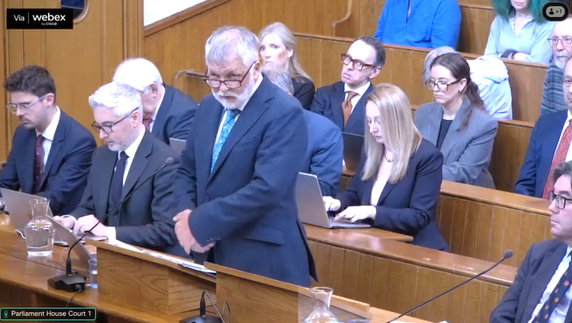

View with comments

Dishonesty and Deceit 747

UPDATE We got an expedited date to “reclaim” (appeal) against the suspension of the case, on 25 September. We shall also be reclaiming against the decision not to send the case straight to the Inner House.

All parties seemed to agree there may just be time, if our appeal is successful, to finish the Scottish judicial review before the Supreme Court meets on 4 November to hear the English case.

While the UK government did not oppose the timetable for the appeal, they will be opposing the appeal itself. One argument they used again is that the closed (secret) process for “intelligence” evidence may need too much time for the hearing to go ahead.

In the course of this argument the UK government’s lawyers revealed that there is a five-day process after the Court of Session reaches its verdict, for the security services to vet the judgement before it is published. All the lawyers just took this as completely normal.

It is not normal. In a case about human rights and excessive power of the state, the security services get to vet what the judges can say? It is astonishing. What kind of society have we become?

Today was a win in that we have the quick appeal and still the possibility of a judicial review. Another way of looking at it is that it is yet more Lawfare and leads to yet another expensive hearing, still without having the actual review. But we will fight hard now because this is the crunch and I will very much be looking for people to come and support at court on the 25th.

UPDATE ENDS

I have never been so coldly angry as I am at Lord Young’s further suspension of the Scottish judicial review of Palestine Action, now until after the Supreme Court decision in the English case.

The grounds given – the public cost of the judicial review and the management of judicial resources – are ludicrous. The costs in Scotland alone of police time in arresting and charging hundreds of people as terrorists for supporting Palestine Action, the costs of the courts that will try them all, and the potential public cost of keeping scores of people in jail as terrorists, will run into many millions. This massively outweighs the costs of a three-day judicial review to decide the legality of all this.

Lord Young granted the judicial review on the explicit grounds that residents of Scotland whose human rights were being infringed in Scotland were entitled to seek a remedy from a Scottish court in Scotland’s separate jurisdiction. He ruled this was irrespective of the existence of proceedings down in London, in another jurisdiction. These were already well underway. Lord Young ruled this…

I am satisfied that it is appropriate to grant permission for this judicial review to proceed in Scotland notwithstanding the existence of English proceedings which are at a more advanced stage. As a matter of principle, a petitioner who has standing and whose petition sets out arguments of sufficient merit to satisfy s27B(2)(b) of the 1988 Act should not be refused permission because of the existence of parallel proceedings in another UK jurisdiction. The petitioner claims that his legal rights have been illegally circumscribed by the 2025 Order. He is entitled to look to the courts of his place of residence for a determination of that complaint…

Any decision in England could not found a plea of res judicata in Scotland. A Scottish court would not be required by precedent to follow any decision of the High Court in England. There had been a number of recent examples of important constitutional challenges proceeding in parallel in Scotland and England.

Since the granted permission for the judicial review in January, I have been five times in court trying to make the review actually happen. It has been postponed again and again in a deliberate delaying tactic. It has been postponed so that secret “intelligence” evidence might be heard in secret court sessions that I am permitted no information from. It has been postponed by a series of suspensions granted to the UK government by Lord Young pending developments in England.

Our petition for the judicial review was submitted last October. The review was granted in January. Dates were set for March. Since then it has been simply delayed and delayed and delayed.

At one stage the review was postponed by Lord Young for three weeks so that the Advocate General could appear in person to argue for a suspension – after he had initially refused two motions for suspension. The Advocate General made no new arguments, cited no new precedents, but in a sickening deference to executive authority Lord Young granted the suspension. In which Hell we have been stuck ever since.

We have spent over £200,000, raised from over 2,000 individuals, on multiple court appearances to try to get things moving. That is even without counting two costs awards looming over our heads from procedural motions to get things moving, which Lord Young ruled against and in the UK Government’s favour.

This is not just Lawfare by the government – an effort at constant delay, delay, delay and a deliberate tipping of the review into a procedural morass where no progress is ever made. It is Lawfare in which the judiciary is complicit with the executive. If Lord Young had no intention of allowing a Scottish judicial review before the English case is decided by the Supreme Court, he ought never to have granted permission in the first place. Instead they have exhausted our resources, financial, intellectual and emotional, by enmiring us in a process it is now clear there was never any intention of bringing to a conclusion.

Everybody already knew the English proceedings were at the Court of Appeal and going, either way, to end up at the Supreme Court, at the time Lord Young granted permission to proceed in January. Had he stated then that he was granting permission to proceed, but only after the Supreme Court had decided the English case, we might have given up and not spent £200,000 and nine months of my life. It has been a form of judicial entrapment in which Lord Young has been, at the kindest possible reading, extremely accommodating to the UK government and utterly indifferent to the ordinary Scots seeking to challenge them.

Tomorrow we appear before the Inner House of the Court of Session to discuss – only – whether an appeal against Lord Young’s suspension of the review can be heard on an urgent basis, or whether the appeal will take place in normal time – which would probably mean after the Supreme Court hearing anyway.

Here is Lord Young’s latest decision in full:

COS-P1017-25 Pet: Craig Murray for Judicial Review

Halliday Campbell WS Office of the Advocate General
25 August 2026 Lord Young

The Lord Ordinary, having resumed consideration of the opposed motion of the petitioner to recall the sist granted on 28 May 2026 and to invite the Lord Ordinary to report the whole cause to the Inner House; refuses same for the reasons set out in the note appended hereto; thereafter, sists the cause pending the outcome of the Supreme Court decision in Ammori v SSHD; and grants leave to reclaim the interlocutor of 25 August 2026.

Andrew Young

Note

  1. By any interlocutor of today’s date, I have re-sisted the cause on the respondent’s motion and have refused the petitioner’s motion to report the whole cause to the Inner House in terms of rule 34.1(1). As with a similar motion heard on 14 July 2026, I shall grant leave to reclaim against this decision.
  2. A summary of the procedural position is set out in the Note appended to the interlocutor issued on 14 July 2026. On that date, I refused the petitioner’s motion to recall a previous sist granted on 28 May 2026. That sist subsequently ended once the determination of the onward appeal in R (Ammori) v Secretary of State for the Home Department was determined by the Supreme Court. Miss Ammori was granted permission to appeal the decision of the Court of Appeal to the Supreme Court and the substantive hearing before the Supreme Court has been fixed for 4th & 5th November 2026.
  3. I was addressed by senior counsel for the petitioner and respondent on 20th August 2026 in relation to further procedure in this cause. At the request of the special advocates previously appointed, I allowed a period for written submissions to be made by the special advocates.

    The special advocates subsequently informed the court that they did not wish to make any submissions on further procedure.

  4. The petitioner opposed the respondent’s motion to renew the sist pending final determination of the Supreme Court’s decision in Ammori. It was submitted that these proceedings had been the subject of repeated delay instigated by the respondent which was contrary to the objective of speedy determination of judicial review proceedings. It was no excuse that these proceedings were delayed by the closed material procedures and need for special advocates. It was incumbent on the respondent and special advocates to act with alacrity to enable the speedy determination objective to be satisfied. There was no rule of court expressly allowing the sist of judicial review proceedings. The court should refuse the sist as incompetent.
  5. The petitioner renewed his motion, previously made in July, that this court should report the whole cause to the Inner House with a view to the Inner House hearing argument on the merits of the petition and answers. In this way, a Scottish appellate decision could be issued and would be before the Supreme Court when hearing the Ammori appeal. There was a distinct Scottish dimension since individuals in Scotland were being prevented from expressing support for Palestine Action. Differences could be seen in the approaches adopted by the police and prosecution authorities in Scotland compared to England. A main plank of the argument in favour of proscription had been sentencing remarks made in Sheriff Court proceedings. In the absence of an express “leap-frog” provision in Scotland, rule of court 34 should be utilised to enable Scottish input into the Ammori proceedings before the Supreme Court.
  6. The respondent sought a further sist until the issue of the Supreme Court’s decision in Ammori. The reasons for the sist had been articulated on previous occasions and remained valid. It was likely that many of the issues raised by the petitioner would be finally resolved by the Supreme Court. If the appeal was successful before the Supreme Court, that would bring these proceedings to an end as the respondent accepts that the decision would be given effect in Scotland. If the appeal to the Supreme Court was unsuccessful, it was still likely that several of the major issues would have been resolved leaving any residual issues to be dealt with in these proceedings. The efficient use of court time and the avoidance of unnecessary costs justified the further sist. The sist was competent under the inherent case management powers of the court.
  7. The motion seeking to have the case reported to the Inner House was opposed as being inappropriate. There was no precedent for a whole cause to be reported in order that the first substantive determination was by an appellate court. The petitioner was assuming that the Inner House would have the capacity to hear argument and issue a decision in advance of the Supreme Court hearing. Such indications as the respondent’s agents had from court administration was that court availability might be an issue. The petitioner was also assuming that the Supreme Court hearing, which had been fixed for two days on the assumption that it was only dealing with an appeal from the Court of Appeal, could accommodate input from a Scottish perspective.
  8. It was not the primary position of either party that the present proceedings should proceed at this stage to a substantive hearing before me.

    The petitioner’s request to have the whole cause reported to the Inner House was recognised by senior counsel to be innovative. I accept that the lack of a precedent should not exclude the benefits of such an approach being evaluated. Judicial review proceedings which do not generally involve significant disputed factual matters could, in theory, be more amenable to a leap-frog approach than other types of proceedings. However, the unique nature of this motion does cause me to hesitate. Unless and until there is guidance from the Inner House as to the situations in which the Inner House would be willing to hear causes in the absence of a decision of the Outer House, it is difficult for a Lord Ordinary to assume the role of gate-keeper for the Inner House. As the respondent pointed out, there are many practical issues which the Inner House are best placed to consider. I have decided that the appropriate course is to refuse the petitioner’s motion to report under rule 34.1 but to grant leave to reclaim so that the matter can be placed before the Inner House for its re-consideration, if the petitioner so wishes.

  9. I shall grant the respondent’s motion to re-sist until the Supreme Court issues its judgment in Ammori. This remains, in my view, the most expeditious way to resolve several of the critical issues. Any issues which remain to be resolved after that decision has been issued, can be focussed for determination in the present petition. I consider this course will minimise legal expense and the burden on the courts’ resources.

    Ultimately, this will secure the speediest final determination of the issues which the petitioner raises.

  10. I shall make no order in relation to the adjustments recently intimated by the petitioner. I anticipate that a further period of mutual adjustment may be required but that will depend on the terms of the Supreme Court’s decision.

Andrew Young

25 August 2026

So Lord Young’s plan is that the Supreme Court should consider the judgements of English courts only, and then decide for the whole United Kingdom, leaving any Scotland only issues to be considered by a subsequent Scottish judicial review.

His idea that a Scottish judicial review held after the Supreme Court judgement will be “speedier” than a review held before the Supreme Court judgement is an interesting defiance of the normal concept of time.

He has given up on his earlier justification of “comity” with the English courts now that he can claim he is acknowledging the superiority of the Supreme Court – but with no Scottish input. His argument boils down to this and this only. It will be cheaper not to have a Scottish judicial review. He has no other point.

In which case, why grant one in the first place?

The £200,000 we have spent on this case has been entirely eaten up by Lord Young and the UK government on procedural rubbish. The court has so far heard nothing of the Genocide in Gaza or of the arrest of respectable pensioners in Scotland just for opposing that Genocide.

The court appears determined to keep it that way. They are simply avoiding a confrontation with the British state. A Scottish court is not going to find the ban legal and proportionate. That woud set up a political and constitutional conflict which the Scottish judiciary do not want. So they find ways to avoid the question.

The Scottish government is also deliberately avoiding conflict with the UK over Palestine Action. The decision to charge the alleged Palestine Action activists as having a “terrorism connection” in spray painting Trump’s golf course in Scotland is sickening. The conflation of some spray paint with terrorism is simply ludicrous. The British state has distorted the word “terrorism” beyond all rational meaning.


But it has to be noted that this is not a UK government decision. It is a Scottish decision by the prosecution – the Crown Office, which is under the Lord Advocate. The Lord Advocate is not only appointed by the Scottish Government, he is a minister in John Swinney’s SNP cabinet. They have decided to press the terrorist connection.

It should be remembered that the SNP did not vote against the proscription of Palestine Action in parliament. They have not used their control of Police Scotland to instruct the police to deprioritise arresting old ladies for holding placards, when there is no shortage of more obvious crimes in Scotland, like burglaries which go uninvestigated.

One key point in our case is that the UK government consulted nobody – not one person – in Scotland before the proscription of Palestine Action. They did not consult the Scottish Government, Police Scotland or the Scottish Counter Terrorism Strategy Board (Contest). They consulted the Israeli Embassy, weapons manufacturers, Jewish groups and even a Lebanese Christian group – but no Palestinians. And not Scotland.

The papers in our judicial review have all been copied as it goes along to the Lord Advocate’s office, at his request. The Scottish government could have intervened to support us. The Scottish government is not arguing that it should have been consulted over the proscription, as it has responsibility for police, courts, prisons, and human rights in Scotland. It is not arguing that Scotland is a separate legal jurisdiction and there is a right to a separate Scottish judicial review.

It was open to the Scottish government to intervene to argue those things. They have declined to do so. It is plain to me Swinney supports the proscription of Palestine Action and has no interest in the independence of the Scottish legal system..

It was recently revealed that the Scottish Government has continued through Scottish Enterprise to funnel funds to the Israeli weapons industry in Scotland. We know that in past ministerial positions Swinney gave government money to Israeli settler company Eden Springs to compensate them for boycott losses, and ordered the removal of teaching materials on Palestine from Scottish schools. That is without mentioning the continued cover-up of the content of Angus Robertson’s Scottish government talks with the Israeli Deputy Ambassador.

Like all those trying to take any action against the Genocide in Palestine, I have run up against the all-encompassing resistance of an amorphous but suffocating Establishment. I had naively hoped to demonstrate that the corrupt nexus is less complete in Scotland. I have instead proven the opposite.

The institutions of western democracy are revealed as a sham. Justice is a lie. A court which will not defend the citizen against an authoritarian state, but defines its role as merely the will of that state, is not an instrument of justice. It is a mere instrument of state power.

I am not putting out a call for people to come to court tomorrow Tuesday, because it is only looking at the timetable and may only last five minutes, and we have no firm start time. However I shall be there from around noon and am not discouraging company if anyone wants to join me.

The fight goes on because the alternative is surrender to rampant authoritarianism. I shall let you know how we get on in court this time. I am not going to request more donations to the legal fund until this procedural hurdle is cleared.

Anybody is welcome to republish and reuse my work, including in translation.

My work has no funding at all except for your subscriptions. If you already, subscribe I would be grateful if you could check if your subscription is still active. Over 80% of my subscriptions lapse when debit or credit cards expire: the systems do not warn you.

Because some people wish an alternative to PayPal, I have set up additional new methods of subscription payment including Patreon account and a Substack account ; if you wish to subscribe that way. The content will be the same as you get on this blog. Substack has the advantage of overcoming social media suppression by emailing you direct every time I post. You can if you wish, subscribe free to Substack and use the email notifications as a trigger to come to this blog and read the articles for free.

I am determined to maintain free access for those who cannot afford a subscription.

Choose subscription amount from dropdown box:

Recurring Donations


PayPal address for one-off donations: [email protected]

Alternatively by bank transfer or standing order:

Account name
MURRAY CJ
Account number 3 2 1 5 0 9 6 2
Sort code 6 0 – 4 0 – 0 5
IBAN GB98NWBK60400532150962
BIC NWBKGB2L
Bank address NatWest, PO Box 414, 38 Strand, London, WC2H 5JB

Bitcoin: bc1q3sdm60rshynxtvfnkhhqjn83vk3e3nyw78cjx9
Ethereum/ERC-20: 0x764a6054783e86C321Cb8208442477d24834861a
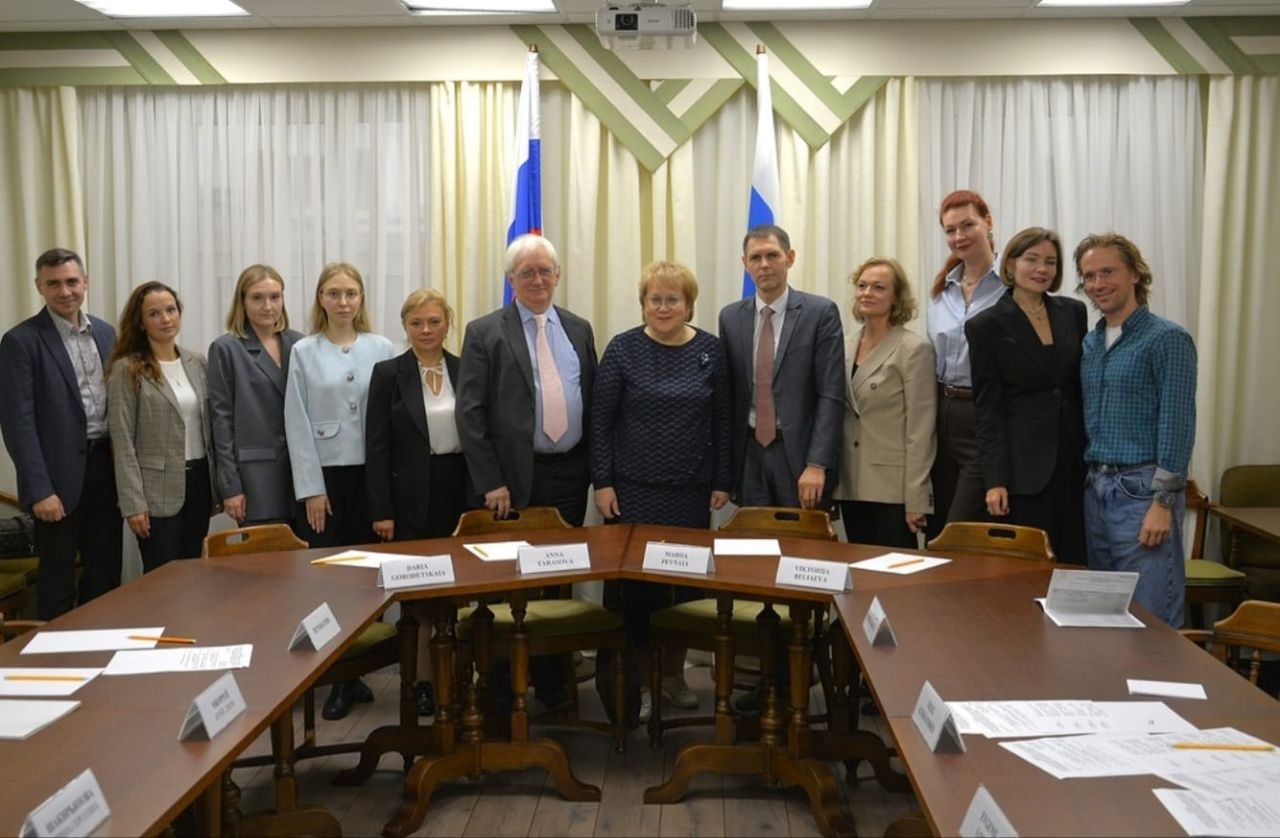
View with comments

Nonsense Drones and Novichok 382

Europe urgently needs to re-establish access to Russian oil and gas. Gas prices are high – as all UK energy consumers know – and German gas storage is at a record low for September. Gulf production is degraded, supplies are cut off and its long-term strategic stability undermined.

German manufacturing already suffered a 9.5% production loss from 2022 to 2026 following the Russian gas shutdown, with the loss in energy-intensive manufacturing (inc petrochemicals, chemicals, metals, glass/ceramics/stone, paper, mineral oil etc.) at 15.2%.

Western Europe can regain access to Russian hydrocarbons either by accepting a negotiated peace in Ukraine, or by attempting regime change in Russia. The political class in Europe have evidently decided to go all out for regime change.

It would of course be much easier, and much safer, to settle the Ukrainian conflict. We can identify the following reasons the European political “elite” is not taking that path:

  • Loss of face and political capital by in situ leaders who have gone all in for conflict with Russia – von der Leyen, Kallas, Merz, Rutte, Stubb etc
  • Generational family and national hatred of Russia by those wanting to reverse World War II in Eastern Europe – von der Leyen, Kallas, Merz, Stubb etc
  • Deep common interests between the political personnel and the military-industrial complex

Note that none of these motives has anything to do with the welfare of their people, and still less “democracy.” I find it very hard to think of any occasion when a drive towards war had such little foundation.

Consider this. The United Kingdom, like many Western countries, is openly supplying the Ukraine with long-range missiles, manufacturing plans for long-range missiles, and personnel to service them, in the full knowledge that Ukraine is using those missiles in an attempt to devastate civilian infrastructure deep within Russia, killing many Russian civilians in the process.

Yet we are repeatedly told by both politicians and the media that Russia is the threat to the UK, when very plainly it is the opposite which is the truth. Until this year, Russia had in three hundred years of history never had any plans to invade or occupy the UK – while the UK invaded Russia in 1854 and 1917. I presume the Russians are currently working on defensive plans against the UK, given the disgraceful warmongering of our government.

The notion that the boundaries of a Ukrainian state, which had never existed in history until 1991, are so sacrosanct they cannot be adjusted to avoid World War III, is mad. They were only ever internal Soviet boundaries. Ukrainian is a new nationality, but the Ukrainians are entitled to a state if they wish one. What they are not entitled to do is insist on the old Soviet boundary, when they have:

  • closed Russian schools, universities, bookshops, theatres, cinemas, libraries, kindergartens, banks and churches
  • banned the Socialist Party, Communist Party, Left Party, eleven other parties and eight trade unions
  • continued the systematic glorification of Nazi and genocidal figures from Ukraine’s past – alienating Poland in the process.

The notion that nuclear war should be fought over who is Mayor of Lugansk has so little public support that Russophobia is being assiduously stoked by Western governments and the EU itself. The latest episode is the extraordinarily thin gruel of the “Leipzig airport attack” story. Yesterday we had the most incredible release of coordinated statements by Western European leaders all telling us that the evidence is plain of a “hybrid attack” by Russia.

All accompanied by no evidence whatsoever.

The German state of course has history with this sort of false flag. On the night of 31 August/1 September 1939 it staged false flag attacks by Polish forces on the German border post at Gliwice (Gleiwitz), and a couple of other locations. Murdered corpses of political prisoners were dressed in Polish uniforms and spread around. A radio broadcast was transmitted in Polish. This “attack” was the justification for the German invasion of Poland the next day.

Now the “Russian attack” on Leipzig Halle airport was on 4 August, and yet the carefully coordinated attribution to Russia, with identical statements from all western European powers, was not launched until 1 September. I have seen it suggested that this was deliberately on the anniversary of Gliwice. That seems to me unlikely, and yet not to have at least avoided the date of perhaps the most famous false flag in history – by the same state – is very curious, when the date was so obviously voluntary for an attack that occurred four weeks before.

If you reject the warmongers’ logic for a moment, the actual scandal is that there were Ukrainian aircraft in Leipzig stacked with German weapons to kill Russians, not that an amateur toy drone allegedly tried to stop them.

To be told that this is a Russian attack by precisely the same set of goons who lied to us that it was Russia that blew up the Nord Stream gas pipeline, is testing not just the gullibility of the public, but its patience.

In the UK the purveyors of Russophobia – including government ministers – fall back repeatedly on the farcical “Russian novichok on Salisbury” story to explain why we should prepare for war with Russia.

Nobody has ever even pretended to answer the dissection of the official line I published in my article Pure – Ten Points I Just Don’t Believe. I am now able to add a further point I was not aware of at the time, thanks to Tim Norman and his coverage of the Sturgess Inquiry. The use of a judicial inquiry to determine official cause of death, rather than a coroner’s court which exists for that specific purpose, is almost always a sign of a government cover-up – see also the Hutton Inquiry and the murder of David Kelly.

But one thing the inquiry did receive was the toxicology report on Dawn Sturgess from the NHS central toxicology lab in Birmingham. This is what it found in Dawn Sturgess’ blood.

It is worth noting that fentanyl was also found, but this was removed from this list presented to the inquiry as she had been given fentanyl in hospital. That does not, of course, mean there was, or was not, already fentanyl in her bloodstream. But what you do have for sure is cocaine, plus a synthetic opioid given by the NHS to heroin addicts, plus gin and tonic, plus two different antidepressants, plus sleeping tablets.

What you don’t have is novichok. The idea that the NHS central toxicology lab cannot detect organophosphate poisoning, or was not testing for it in the blood of someone in Salisbury when the entire media was already screaming novichok, is arrant nonsense.

Only the Ministry of Defence laboratory at Porton Down claimed to find novichok – and controlled the samples which the OPCW (an equally corrupt institution) got.

Dawn Sturgess was a frail, known long-term drug addict. The combination in her bloodstream could kill anybody – of course depending on the quantities. The astonishing thing is that the pathologist at the inquiry stated he had been given no quantities or concentrations for these substances. He was therefore in no position to say they did not kill her.

This is incredible. There is no such thing as a toxicology report which does not quantify concentrations. Otherwise the information is clinically meaningless. I have spoken with three doctors, two nurses and a senior NHS administrator. All say it is impossible the toxicology report came without quantification. I assume the pathologist was not lying; so they must have been deliberately deleted. Only government can do that, and the obvious motive is to cover up the actual cause of death.

Let us face it: from that list of substances in her blood the actual cause of death is extremely obvious.

The great structural weakness of the inquiry was that nobody had the job of scepticism about the official story. The only non-governmental representative was Michael Mansfield, who represented Dawn Sturgess’ family, and his brief was to argue that Dawn Sturgess was not a drug addict. That – I am sorry to say, completely untrue – version of events fitted the story which both the government and Sturgess’s family wished to be put forward.

I am genuinely upset to have to relate unpleasant things about a dead woman who was a victim of circumstance in her life, in order to tell the truth, but you don’t get cocaine and buprenorphine in your blood by accident. We therefore had the farce of the police apologising at the inquiry for having called Dawn Sturgess a drug addict.

So we have alleged novichok in Salisbury which killed nobody, and an explosive drone, or possibly two, in Leipzig which did not explode. To counter this massive threat, we need to push an entire continent to nuclear war. As a first step, we need to cut health and social spending to give trillions more to arms manufacturers, and prepare our children for conscription, to die on the battlefield.

Forgive me if I am not convinced.

Anybody is welcome to republish and reuse my work, including in translation.

My work has no funding at all except for your subscriptions. If you already, subscribe I would be grateful if you could check if your subscription is still active. Over 80% of my subscriptions lapse when debit or credit cards expire: the systems do not warn you.

Because some people wish an alternative to PayPal, I have set up additional new methods of subscription payment including Patreon account and a Substack account ; if you wish to subscribe that way. The content will be the same as you get on this blog. Substack has the advantage of overcoming social media suppression by emailing you direct every time I post. You can if you wish, subscribe free to Substack and use the email notifications as a trigger to come to this blog and read the articles for free.

I am determined to maintain free access for those who cannot afford a subscription.

Choose subscription amount from dropdown box:

Recurring Donations


PayPal address for one-off donations: [email protected]

Alternatively by bank transfer or standing order:

Account name
MURRAY CJ
Account number 3 2 1 5 0 9 6 2
Sort code 6 0 – 4 0 – 0 5
IBAN GB98NWBK60400532150962
BIC NWBKGB2L
Bank address NatWest, PO Box 414, 38 Strand, London, WC2H 5JB

Bitcoin: bc1q3sdm60rshynxtvfnkhhqjn83vk3e3nyw78cjx9
Ethereum/ERC-20: 0x764a6054783e86C321Cb8208442477d24834861a
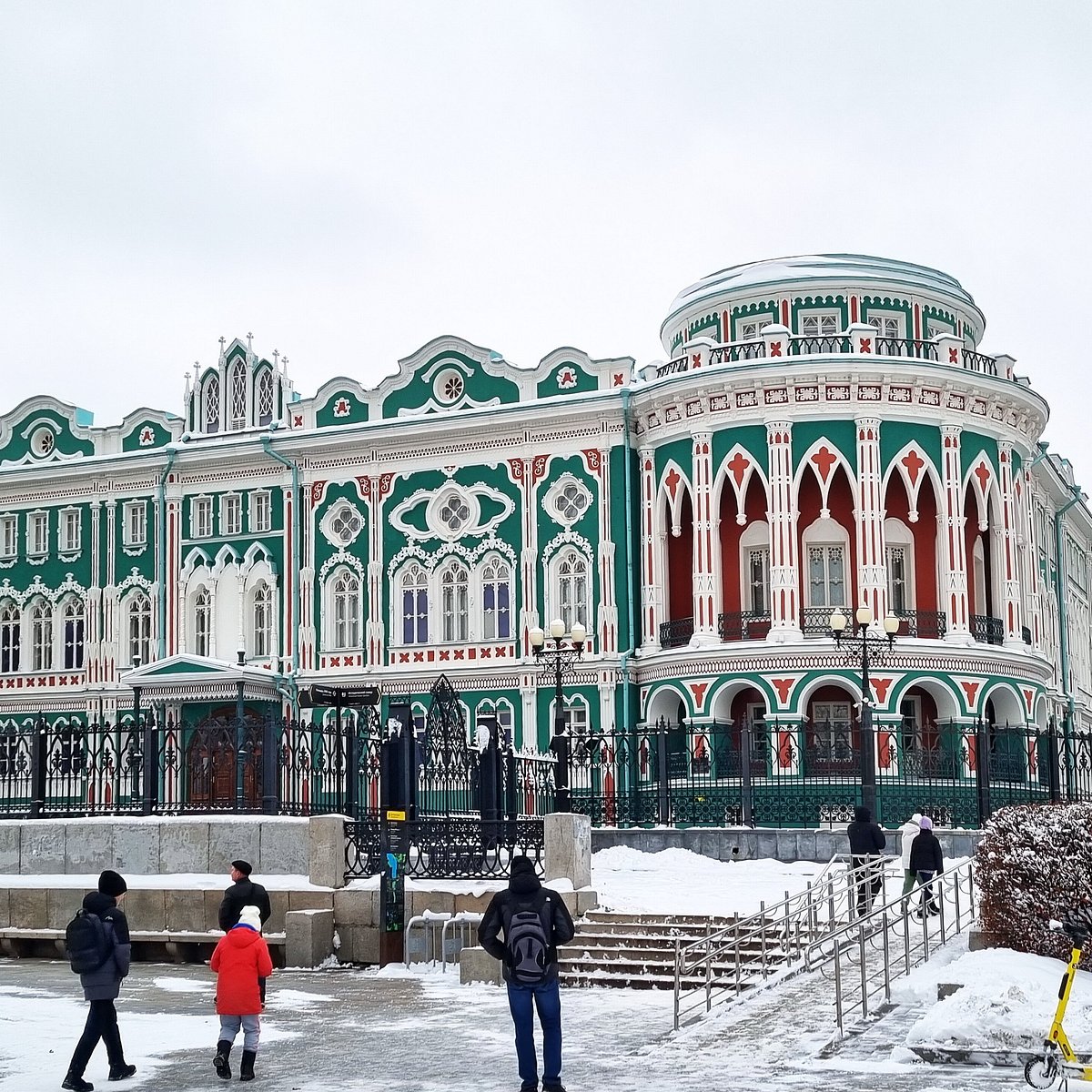
View with comments